

|
Key takeaways:
|
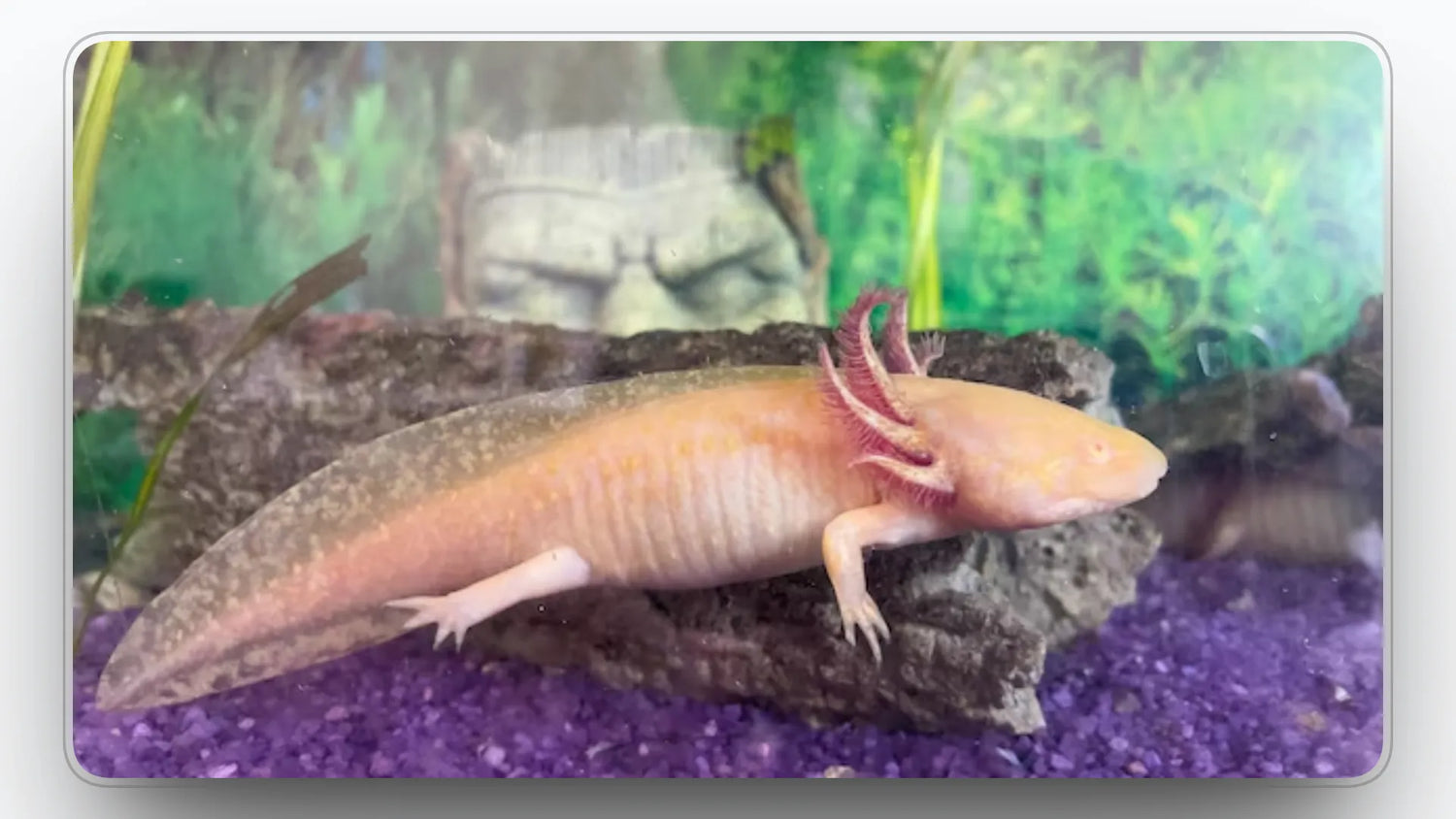
Mosaic and hypomelanistic are labels you may see in axolotl listings, but they describe different things. Mosaicism is a genetics term for when one animal has two or more genetically different sets of cells.
Hypomelanistic is used in axolotl breeding and pet listings for axolotls that produce much less melanin than usual, which can make the animal look lighter overall.
Buyers often worry about mislabeling, confusing hypomelanistic with albino traits, and trusting a single photo that can distort pigment. This guide breaks down 9 differences to help you compare what you can confirm visually and what usually needs more than a picture alone.
How to Tell Mosaic and Hypomelanistic Axolotls Apart Fast
Start with overall body tone in plain white room light, then check whether the pattern looks sectioned. Hypomelanistic is usually described as reduced melanin that shows a lighter overall look, while mosaic is commonly used for patchy or mixed pigment zones.
- Check overall body tone in plain white room light.
- Look for uneven sections with clearer boundaries, not only lighter shading.
- Compare left and right side photos taken under the same lighting.
- Ask for one side view and one top-down view, unedited.
- Avoid blue tank lighting and filters that wash out pigment.
- If you are unsure, request a short unedited video in plain room lighting.
A careful check helps you avoid costly mix-ups. If the trait only appears in one angle or one lighting setup, do not treat it as proof.
9 Differences Between Mosaic and Hypomelanistic Axolotls
Use these 9 differences to compare what you can see in neutral light, what you should verify with additional angles, and what a listing photo cannot confirm. A true genetics confirmation is not something most buyers can verify from photos alone, so use consistent visual evidence and breeder documentation when possible.
1. What do mosaic and hypomelanistic mean in listings
Hypomelanistic is commonly used in axolotl breeding and pet listings for axolotls that produce much less melanin than usual. That means the label usually describes pigment intensity across the animal, not a special pattern map.
Mosaic is often used in listings to describe a patchy or mixed pigment look. Mosaicism is a real genetics term, but a listing label does not confirm the biological mechanism behind the appearance. Treat mosaic as a visual description unless a breeder can document the line.
2. What is the fastest visual check
Start with overall body tone in neutral light. Hypomelanistic often looks lighter across the head, body, and tail, not only in one isolated area.
Then check whether the animal looks sectioned. Mosaic labeled axolotls often show areas that look like they do not match, such as one zone appearing darker or patterned differently than the rest.
3. Is this a pattern layout change or a pigment level change
With hypomelanistic, the main signal is pigment level. Reduced melanin can make markings look softer and can reduce contrast between spots and the base tone.
With mosaic labeling, the main signal people point to is layout. You may see different zones of pigment or pattern across the body, even when the overall tone is not especially light.
4. Do you see clear patch boundaries and stronger contrast
Mosaic type descriptions often focus on boundaries. Transitions between areas can look irregular, with clearer breaks between zones instead of a smooth fade.
Hypomelanistic axolotls can still show markings, but reduced melanin can make them appear less sharp in photos. That can make speckling and shading look faint under bright lights.
5. Does the pattern look similar on both sides
Hypomelanistic traits often look similar on both sides because the pigment reduction affects the overall appearance. If one side looks much darker, uneven lighting or camera exposure can be the cause.
Mosaic labeled axolotls may look less symmetrical side to side. One flank can show heavier pigment or a different pattern density that stays visible across multiple images.
6. Is the look consistent from head to tail
Use a three zone scan: head and gills, mid body, and tail. Hypomelanistic often shows a similar lighter tone in all three zones, even if small areas vary.
Mosaic labeled axolotls often show clearer section changes across zones. The tail can read differently from the torso, or the limbs can show pigment differences that do not match the body.
7. How lighting and cameras can mislead identification
Bright LEDs, blue tank lights, and phone auto exposure can wash out pigment and reduce contrast. That can make many axolotls look more hypomelanistic than they appear in plain room light.
Camera angle can also exaggerate patchiness. A pattern can look blocky from one view and less obvious from another, so treat one photo as incomplete evidence.
8. What to request from a seller to verify the label
For hypomelanistic, ask for an unedited video in plain white room lighting plus one full body side photo. Reduced melanin should still read as a lighter overall look across angles.
For mosaics, ask for left side, right side, and top down photos taken under the same light. Ask whether the patchy look stays visible when the axolotl moves, not only in one pose.
9. What the label changes for care and buying decisions
Neither label changes the fundamentals of axolotl care. Stable water conditions, appropriate temperature, and low stress handling matter more than morph names.
Use morph labels for identification and preference, not as proof of health or quality. Prioritize clear health signs and a seller who can provide consistent, neutral light photos and video.
Common Confusions That Lead to Mislabeling
Many mislabels start with lighting and camera settings. Bright LEDs and phone auto exposure can wash out pigment, making a normal axolotl look lighter than it is. Colored tank lights can also shift tones and hide contrast, which changes how pattern and pigment read in photos.
Another common issue is loose use of morph terms. Some listings use “mosaic” as a catch all for any unusual patterning, even when the look is caused by angle, glare, or normal variation. Others treat hypomelanistic and albino as interchangeable labels, even though they describe different pigment concepts, so you should always verify with neutral light photos and an unedited video.
What You Can Confirm From Photos and What You Cannot
Photos can help you narrow down possibilities, but only when you treat them as evidence, not a final answer. The goal is to confirm what the image truly shows and avoid conclusions based on lighting or editing. If you're unsure how to evaluate your axolotl's appearance, our morphs checklist can guide you.
- You can confirm overall lightness if the photo is taken in neutral white light and the whole body is visible.
- You can confirm obvious patch boundaries when they appear the same way across multiple angles.
- You can confirm whether the left and right sides look similar if both sides are photographed in the same lighting.
- You can confirm basic pattern placement when the image is sharp, unfiltered, and not overexposed.
- You cannot confirm a morph label from one photo, especially under blue tank lights or heavy phone processing.
- You cannot trust pigment intensity in overexposed images because melanin can look washed out.
- You cannot rely on glare and reflections since they can create false patches and hide real contrast.
If the morph label affects your buying decision, ask for multiple unedited photos plus a short video in plain room lighting. That is the fastest way to see whether pigment and pattern stay consistent when the axolotl moves.
Ready to Choose Your Axolotl
If you are ready to buy, focus on clear evidence first, then choose the morph you like. Ask for unedited photos in plain room lighting, a short video, and a simple description of how the axolotl looks in normal light.
If you want to buy a mosaic or hypomelanistic axolotl from Axolotl Planet, look for listings that show multiple angles and honest lighting. Choose an axolotl based on health, clear documentation, and a seller who answers questions directly.
FAQs
What is a mosaic axolotl?
A mosaic axolotl usually refers to a patchy or mixed appearance where different areas look like they do not match. Sellers may use the term based on looks, so photos alone may not confirm the cause.
What is a hypomelanistic axolotl?
Hypomelanistic is used for axolotl variants described as having reduced melanin, which often creates a lighter overall look. The effect should show across the body, not only in one small area.
Can a photo confirm the morph?
A single photo rarely proves a morph label. Neutral lighting, multiple angles, and an unedited video make pigment and pattern easier to judge.
Is hypomelanistic the same as albino?
INo. In axolotl breeding and listings, hypomelanistic is used for reduced melanin that often looks like a lighter overall tone. Albinism is a lack of melanin production, which is a different pigment condition. (Source: MedlinePlus, Albinism.) Listings sometimes mix these terms, so verify with neutral-light photos and a short unedited video.
Why do listings mislabel mosaic?
Many mislabels come from lighting, filters, and phone auto exposure that changes pigment and contrast. Some sellers also use “mosaic” as a catch all for unusual patterning.
What photos should I request from a seller?
Ask for left side, right side, and top down photos in plain white room lighting. Also request a short unedited video to see how the axolotl looks when it moves.
Does the morph change care needs?
No. Water quality, stable temperature, correct diet, and low stress handling matter more than morph. Choose based on health signs and seller transparency.
What is the fastest way to tell them apart?
Start with overall lightness, then check whether the pattern looks sectioned and uneven. Confirm with neutral light photos and video before trusting a label.


Leave a comment
This site is protected by hCaptcha and the hCaptcha Privacy Policy and Terms of Service apply.