

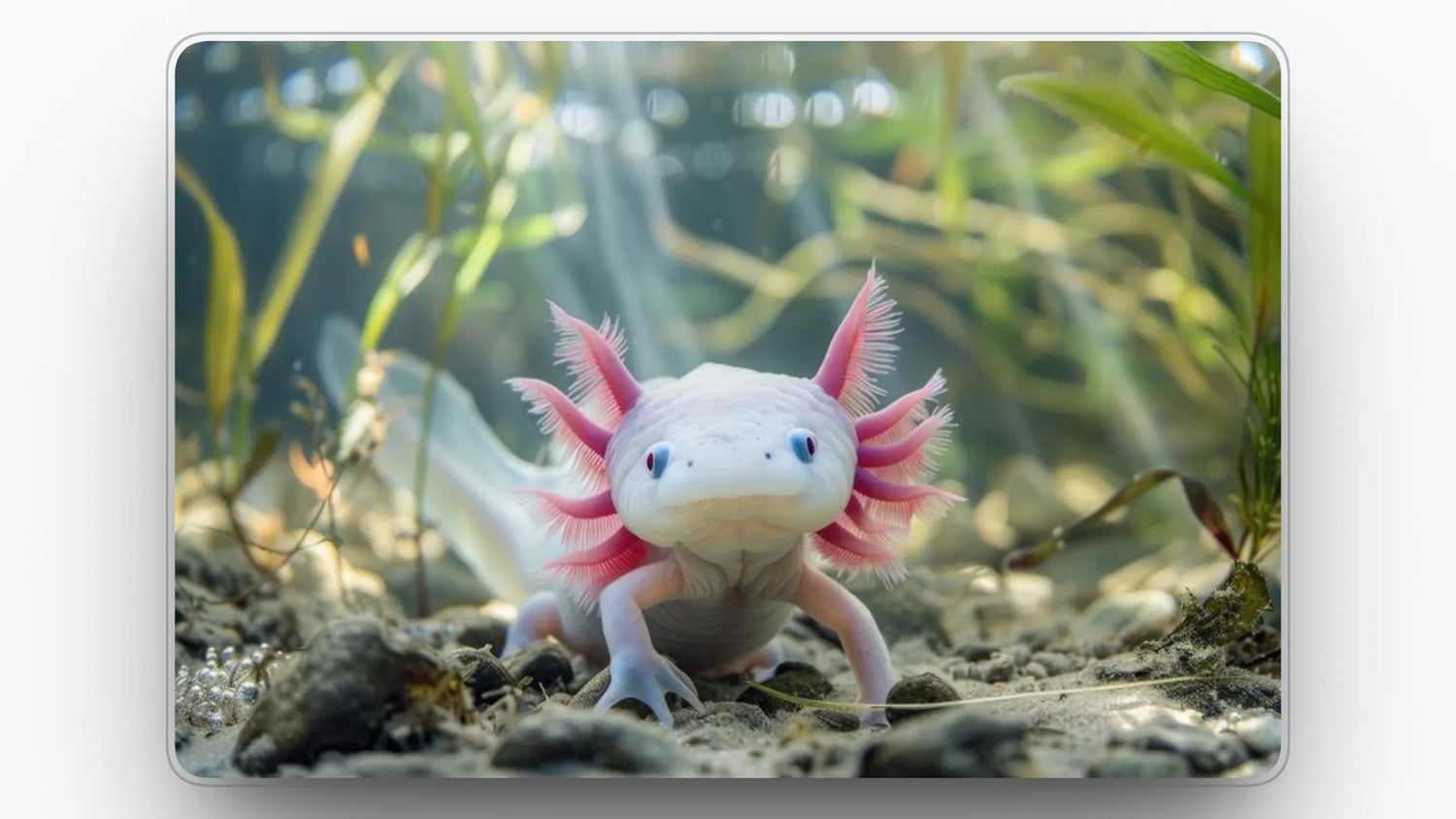
An axolotl morph is the color and pattern an axolotl is born with. You can usually identify common morphs by checking three things first, the eye color, the body color, and whether the eyes and skin have a shiny look. This checklist helps you tell the most common morphs apart using simple signs.
Many axolotls look alike at first, especially in photos. People often confuse leucistic and albino because both can look light, or mix up wild type and melanoid because both can look dark. Lighting, age, and camera filters can also change how a morph looks, which makes buying or naming a morph stressful.
In this guide, you will get a quick morph checklist, a simple table, and easy comparisons for the most common types so you can identify them with more confidence.
Use this 60 Second Checklist
Use this 60 second checklist to narrow down your axolotl morph fast. Start with the eyes and shine, then confirm with body color, spots, and glow.
Step 1 Check the Eyes
- Dark eyes often match leucistic or wild type
- Red or pink eyes often match albino types
Step 2 Check for Shine
- A gold ring or shiny look in the eyes often matches wild type or golden albino
- Little to no shine can point to melanoid
Step 3 Check the Main Body Color
- Dark mottled body often matches wild type
- Pale pink or white body often matches leucistic or white albino
- Golden body often matches golden albino
- Very dark body often matches melanoid
- Brown or copper body often matches copper
- Gray or lavender body often matches axanthic or lavender types
Step 4 Check the Spots
- No spots can fit more than one morph, so use the eye and body checks too
- Light freckles can fit leucistic, copper, and some light morphs
- Heavy mottling often matches wild type or dalmatian style morphs
Step 5 Check for Glow
- Green glow under UV light points to GFP
- No glow means it is not GFP
Quick Axolotl Morph ID Table
Use this table to match what you see in real life. Start with eyes and shine, then confirm with body color and spots.
|
Morph |
Body color |
Eye color |
Gold ring or shine |
Mix up |
Fast tip |
|
Wild type |
Brown, gray, olive with mottling |
Dark |
Often yes |
Melanoid |
Look for mottled pattern plus a shiny look |
|
Leucistic |
Pale pink or white |
Dark |
Usually low |
White albino |
Pale body with dark eyes is the easiest clue |
|
White Albino |
White or very light |
Red or pink |
Can look shiny |
Leucistic |
Red or pink eyes are the clear sign |
|
Golden Albino |
Yellow or gold |
Red or pink |
Often yes |
Leucistic |
Red or pink eyes plus a golden body |
|
Melanoid |
Very dark, often solid |
Dark |
Little to none |
Wild type |
Dark body with low shine and fewer bright specks |
|
Copper |
Brown or copper |
Light, often tan or gold tone |
Often yes |
Wild type |
Warm brown body looks more copper than olive |
|
Axanthic |
Gray, silver, charcoal |
Dark |
Often low |
Melanoid |
Gray tone without yellow or gold hints |
|
Lavender |
Light gray, lilac, soft purple tone |
Dark |
Often low |
Leucistic |
Not white or pink, more gray or lilac |
|
Piebald |
White base with clear dark patches |
Dark in pigmented areas |
Varies |
Leucistic |
Sharp patches that look painted on |
|
GFP |
Any base morph, glows green under UV |
Same as base morph |
Same as base morph |
Any morph |
Glow under UV confirms GFP, color alone does not |
Common Axolotl Morphs and How to Spot Them
Use these simple checks to identify common axolotl morphs by eyes, body color, shine, and spots. Each morph below includes the main signs, common mix ups, and a quick yes or no test to confirm. Colors can look different under tank lights and phone filters, so check in neutral light when possible.
1. Wild Type
Wild type often has more “mixed” detail than most dark morphs. The head, back, and tail can show slightly different tones on the same animal. Many look plain as juveniles, then pattern contrast becomes clearer with growth. If you are unsure, compare a calm daylight photo and a neutral indoor photo.
Key Signs
- Mottled pattern that looks mixed across the body
- Dark eyes
- Often has a shiny look in the eyes
- Color may look more green or more brown depending on the light
Most Common Mix Up
- Melanoid
- Copper
Quick Test
First, look for a mixed mottled pattern that spreads across the body and tail. Next, make sure it is not mostly solid dark, since melanoid usually looks more solid than wild type.
2. Leucistic (Lucy)
Leucistics can look snow white in photos but softer in real life. Their skin is slightly see through, so the body can look more pink after movement. Freckles may appear slowly and usually stay light and scattered. For a true read, view the body away from colored tank lights.
Key Signs
- Light body that can look pinkish or creamy white
- Dark eyes
- Light freckles may appear as it grows
- Gills often look pink or red
Most Common Mix Up
- White albino
- Lavender
Quick Test
First, check the eyes. If they are dark, it is not an albino. Next, confirm the body is pale white or pinkish and not gray or lilac toned, which is more common in lavender types.
3. White Albino
White albinos can look “flat” on camera because contrast is low. In person, you may see a cream or peach cast that photos miss. Any markings tend to stay faint and soft edged. Use a neutral light view to avoid the blown out look.
Key Signs
- White or very pale body
- Red or pink eyes
- Body may look extra bright under strong lighting
- Spots are usually light if present
Most Common Mix Up
- Leucistic
- Golden albino
Quick Test
First, look at the eyes in natural light. If they are red or pink, it is an albino and not leucistic. Next, check the body color. If it looks white or cream without a clear golden tone, it is more likely white albino than golden albino.
4. Golden Albino
Golden albinos usually show warmth most clearly along the back line. Many juveniles start pale and the gold deepens with size. The yellow tone should still look warm in plain light, not only under warm bulbs. A side view often shows warmth better than a top down photo.
Key Signs
- Golden or yellow body tone
- Red or pink eyes
- Often has a shiny look
- Light freckles may appear as it grows
Most Common Mix Up
- Leucistic
- White albino
Quick Test
First, confirm the eyes are red or pink, since that points to an albino type. Next, look at the body in neutral light. If the body has a clear warm yellow or gold tone instead of plain white or cream, it is more likely a golden albino.
5. Melanoid
Melanoid usually looks uniform from head to tail. Small specks and shimmer are often minimal even up close. This is why sellers can mislabel very dark wild types as melanoid. Ask for a slow pan video so you can see if hidden mottling appears.
Key Signs
- Dark gray to black body
- Often looks more solid and less mixed than wild type
- Little to no shiny look in the eyes
- Pattern is usually minimal compared with wild type
Most Common Mix Up
- Wild type
- Axanthic
Quick Test
Look for a body that appears mostly solid dark instead of clearly mottled and mixed. Then compare shine under the same light, since melanoid usually looks less shiny than wild type.
6. Copper
Copper reads warm and stays warm in neutral light. It often looks like cinnamon or chocolate rather than olive. The warmth usually covers the whole body, not just a few areas. Request a plain background photo so the tone is not influenced by decor.
Key Signs
- Warm brown or copper tone instead of olive or gray
- Eyes often look lighter and more golden
- Light freckles or light speckling may show
- Color stays warm even in neutral light
Most Common Mix Up
- Wild type
- Golden albino
Quick Test
Check the body color in neutral light. If it stays warm brown or copper instead of turning olive or gray, that supports copper. Then look at the eyes, since copper often shows a lighter, golden eye look compared with wild type.
7. Axanthic
Axanthic has a cool gray feel instead of a warm brown feel. The best clue is the absence of yellow tone in plain light. Many photos make them look blue, but the real look is more smoky silver. If you keep seeing “blue axolotl” photos online, this explanation of what people call blue axolotls helps clarify what’s actually happening with lighting, filters, and perception. Ask for one clip in daylight to confirm the base tone.
Key Signs
- Gray, silver, or charcoal body
- Usually lacks yellow or gold hints
- Eyes are usually dark
- Often looks cooler in tone than copper or wild type
Most Common Mix Up
- Melanoid
- Lavender
Quick Test
Look at the body in neutral light. If the color reads as gray or silver with no warm yellow hint, that supports axanthic. Then compare the tone, since axanthic usually looks cooler while lavender can look more soft and lilac.
8. Lavender or Silver Dalmatian
Lavender is often used as a look name, not a strict gene label. The lilac tint can be subtle in juveniles and clearer later. Many develop spotting gradually, so early photos may under show it. Ask for an updated photo timeline if you are buying young.
Key Signs
- Light gray or soft lilac tone
- Spots often become more noticeable as it grows
- Eyes are usually dark
- Tone looks more lilac than plain gray in neutral light
Most Common Mix Up
- Leucistic
- Axanthic
Quick Test
Check the base color in neutral light. If it looks gray with a soft lilac tint instead of white or pink, that supports lavender. Then watch for spots developing with age, since many dalmatian style lavenders show more spotting over time.
9. Piebald
Piebald patches usually keep their placement as the axolotl grows. The edges stay bold and defined rather than fading into freckles. Pattern clarity does not depend much on lighting, which makes it easier to verify. Ask for a close photo of patch borders.
Key Signs
- White base color
- Sharp dark patches with clean edges
- Patches look bold rather than faded freckles
- Eyes and shine can vary based on the base morph
Most Common Mix Up
- Leucistic
- Wild type
Quick Test
Look for large, clear patches with sharp edges, not small freckles. If the dark areas form bold blocks on a light base, it is more likely piebald than leucistic.
10. GFP
GFP should show a consistent green glow under a safe blue light. It should not rely on editing or “bright” filters to look special. Glow strength varies, but it should be visible on repeat. Ask for a short before and after clip in the same spot.
Key Signs
- Can look like a normal morph in daylight
- Glows green under UV light
- Eye color and body color depend on the base morph
- Glow is the true identifier
Most Common Mix Up
- Any morph that does not glow
Quick Test
Check under UV light briefly. If it glows green, it is GFP. If it does not glow, it is not GFP, even if the body looks bright in normal light.
Lookalike Guide For Common Axolotl Morph Mix Ups
These quick comparisons help you spot the difference when two morphs look similar in photos or in the tank. Colors can look different under blue tank lights and phone filters, so check in neutral light when possible.
1. Leucistic Vs Albino
Photos can trick you because pale bodies blow out under bright lights. Use a short video instead of one still image. Look at the eyes from the front, not the side. Ask for a daylight clip if you are buying online.
What To Look For
- Check the eyes first in natural or neutral light
- Dark eyes point to leucistic
- Red or pink eyes point to albino
Quick Check
If the eyes are dark, it is leucistic. If the eyes are red or pink, it is albino.
2. Wild Type Vs Melanoid
Ask for a slow pan from head to tail. Pattern differences show up when the body moves, not in one frozen frame. Check the tail base because it often reveals hidden detail. Use plain light because dark tanks hide texture.
What To Look For
- Wild type looks mixed and mottled across the body and tail
- Melanoid looks more solid dark with less visible pattern
- Compare both under the same light if you can
Quick Check
If the body looks clearly mottled and mixed, it is more likely a wild type. If it looks mostly solid dark with low shine, it is more likely melanoid.
3. Melanoid Vs Axanthic
Do not judge by blue LEDs. It pushes both toward the same look. Compare the body to a white surface like a tub or paper behind the tank. A true axanthic keeps a cool cast in plain light. Ask for two photos under the same white light.
What To Look For
- Axanthic usually looks gray or silver with a cool tone
- Melanoid usually looks charcoal to black and more solid
- In neutral light, axanthic often looks lighter than melanoid
Quick Check
If it looks cool gray or silver in neutral light, it is more likely axanthic. If it looks deep charcoal or black and very solid, it is more likely melanoid.
4. Copper Vs Wild Type
Warm bulbs make both look similar. Use a neutral white light to remove the tint. Check the face and legs because warmth shows there first. Ask for a plain background photo to avoid color bounce from decor.
What To Look For
- Copper looks warm brown or chocolate in neutral light
- Wild type often looks olive or gray with a mottled pattern
- Copper usually keeps a warm tone even when lighting changes
Quick Check
If the body stays warm brown in neutral light, it is more likely copper. If the color shifts toward olive or gray with a mottled pattern, it is more likely a wild type.
Rare Or Special Axolotl Morphs To Know
These morphs are less common and can be harder to identify from one photo. Names are sometimes used differently by different breeders, so it helps to ask for clear pictures and background details. If you want a bigger picture of how different shades show up across morphs (including light, dark, and unusual tones), this guide to axolotl color types
is a useful companion.
1. Mosaic Or Chimera
Mosaic or chimera axolotls can show a patchwork look, such as clear sections of different colors or patterns on the same body. The split can look uneven and can appear on the face, body, or tail.
What To Look For
- Two clearly different color areas on one axolotl
- Patchwork or split looking pattern that does not match normal spotting
- A look that stays unusual even in neutral light
Quick Check
If you see large, clear areas of two different looks on the same axolotl, it may be mosaic or chimera. If it looks like normal freckles or normal mottling, it is more likely a common morph.
2. Firefly Or Enigma
Firefly and enigma are often described as special or lab made types and may not have one single set of visual signs that always match. Because naming can vary, the most reliable way to confirm them is to check the breeder background and how the axolotl was produced.
What To Look For
- Unusual high contrast look that does not fit common morph rules
- Listings that include clear breeder details and history
- More than one photo in neutral light
Quick Check
If the seller cannot explain the background clearly, treat the name as a label and not a confirmed type. If there is solid breeder history and clear photos, the label is more trustworthy.
3. Other Uncommon Types You May See
Some sellers use extra names for special looks, mixes, or line bred traits. These can be real, but the appearance can overlap with common morphs.
What To Look For
- Clear photos in neutral light
- A simple description of parent morphs
- A consistent look across more than one photo
Quick Check
If the axolotl matches a common morph in your checklist, go with the common ID first. If it does not match well and the breeder has strong details, it may be an uncommon type.
Where To Buy Axolotls And Morphs Safely
If you are shopping for a specific morph, choose a seller who shares clear photos in neutral light and can answer basic questions about age, feeding, and health. A good seller will also explain why they labeled the morph that way, instead of guessing from one picture.
At Axolotl Planet, you can browse morphs and compare photos to choose the look you want with more confidence. If you are unsure between two morphs, ask for extra photos in neutral light and a simple background note before you buy, since lighting and filters can change how colors look.
FAQs
What Is An Axolotl Morph?
A morph is the color and pattern an axolotl is born with. Most morphs are identified by eye color, body color, shine, and spotting.
How Do I Tell Leucistic From Albino?
Check the eyes in natural or neutral light. Leucistic has dark eyes, while albino has red or pink eyes even when the body looks very light.
Do Axolotls Change Color As They Grow?
Yes, many axolotls develop more freckles or patterns as they mature. The base morph stays the same, but the shade and spotting can become clearer over time.
What Is GFP?
GFP is a trait that makes an axolotl glow green under UV light. It can sit on top of other morphs, so you still need to identify the base morph too.
What Is The Rarest Axolotl Morph?
Rarity depends on breeder lines and local availability, so it changes over time. Uncommon types like mosaic, chimera, and some specialty lines are often harder to find than common morphs.
Which Morph Is Best For Beginners?
Pick a healthy axolotl from a trusted breeder, since care is the same across morphs. If you want an easy ID, leucistic and wild types are common and simple to recognize.

Leave a comment
This site is protected by hCaptcha and the hCaptcha Privacy Policy and Terms of Service apply.