

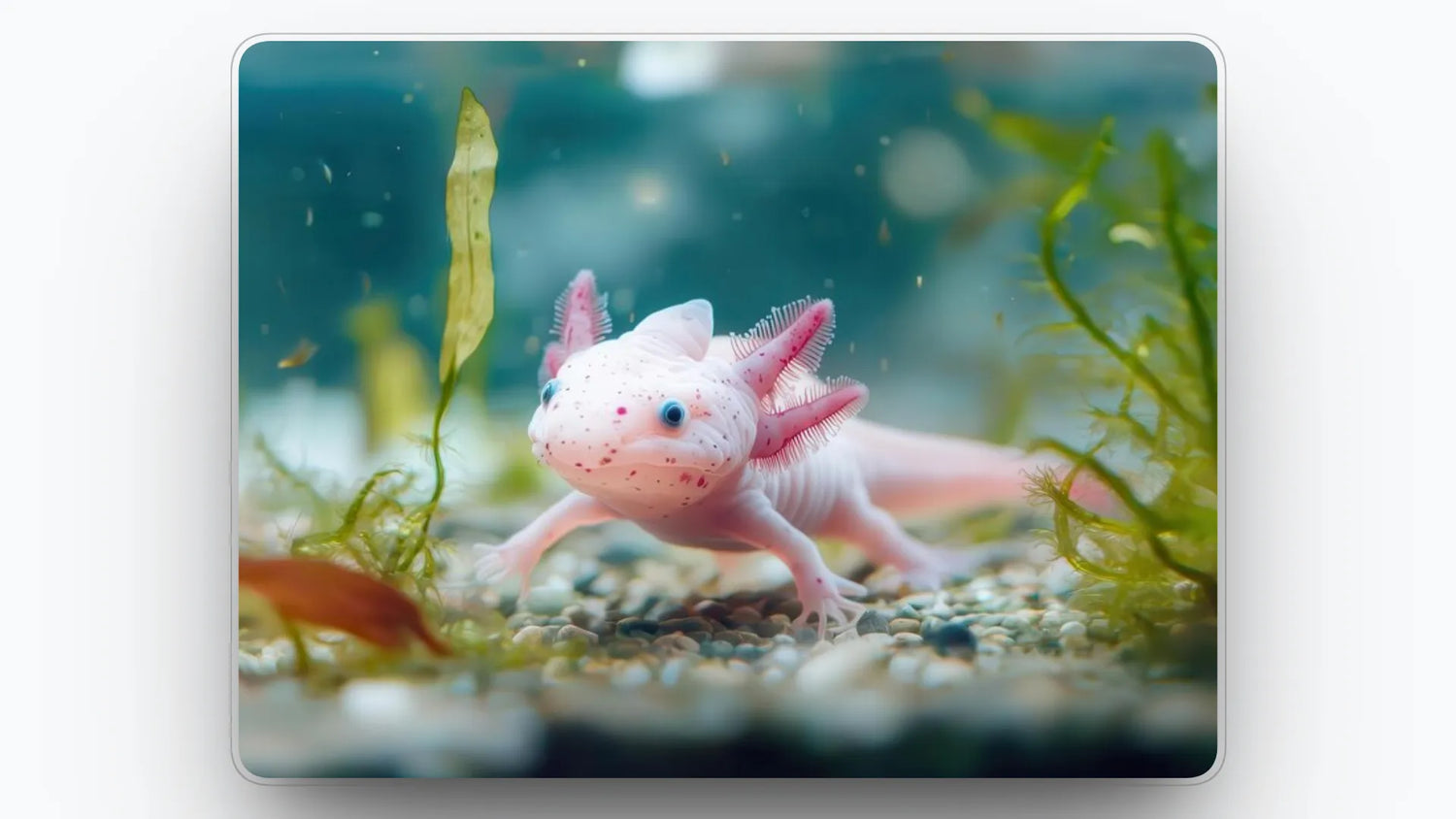
Axolotls come in several main colors called morphs. The most common morphs are wild type, leucistic, albino, golden albino, melanoid, axanthic, copper, and GFP. GFP is a glow trait that can show up on different base colors. Because breeders can mix traits, you may also see combo morphs that look new but are simply a mix of two known traits.
Most people want to know which color they have, how to tell leucistic vs albino, and whether certain colors are rare or more expensive. It can also be confusing because some names are used differently by different breeders, and photos online can look different depending on lighting, age, and tank background.
In this guide, you will see a clear list of axolotl colors, simple ways to identify them, and the most common combo morphs people talk about, so you can understand what you are looking at without guessing.
Axolotl Color Morph List
This table shows the main axolotl morphs and the easiest clues to identify each one. More patterns and combo morphs are listed later in this guide.
|
Color Morph |
What it Looks Like |
Eye clue |
Commonness |
|
Wild Type |
Dark with speckles |
Dark eyes, often gold ring |
Common |
|
Leucistic |
Pink or white |
Dark eyes |
Very common |
|
Albino |
White or pale |
Light or red eyes |
Common |
|
Golden Albino |
Yellow or gold |
Light or red eyes |
Common |
|
Melanoid |
Very dark, less shiny |
Dark eyes |
Uncommon |
|
Axanthic |
Gray or silver |
Dark eyes |
Uncommon to rare |
|
Copper |
Warm brown |
Often red shine |
Rare |
|
GFP |
Any base color with glow |
Any |
Uncommon |
Quick Guide What Morph Means
- A morph is an axolotl color or look made by genes and selective breeding.
- Axolotl skin color comes from pigment cells that create dark, yellow, and shiny tones.
- Some traits are add ons, like GFP, which can show on many base colors.
The Core Axolotl Morphs and How to Spot Them
These are the main color morphs most axolotls fall into, even if a breeder uses a different name. Learn these first and you can identify most axolotls using body color, eye clues, and glow. Photos can look different due to lighting, age, and tank background, so use more than one clue.
1. Wild Type
Wild types can vary a lot from one axolotl to the next, even when both are “wild type.” Some look more olive or greenish, while others look more brown-gray. Natural tank setups and darker substrates can make them look even darker. In photos, the same wild type can look totally different depending on the background.
- What it looks like: Dark, natural tones with speckles and color variation
- Eye clue: Dark eyes, often with a gold ring
- Often confused with: Melanoid when the wild type is very dark
- How common it is: Common
- Common combos: Wild type with GFP, wild type with heavier speckling
2. Leucistic
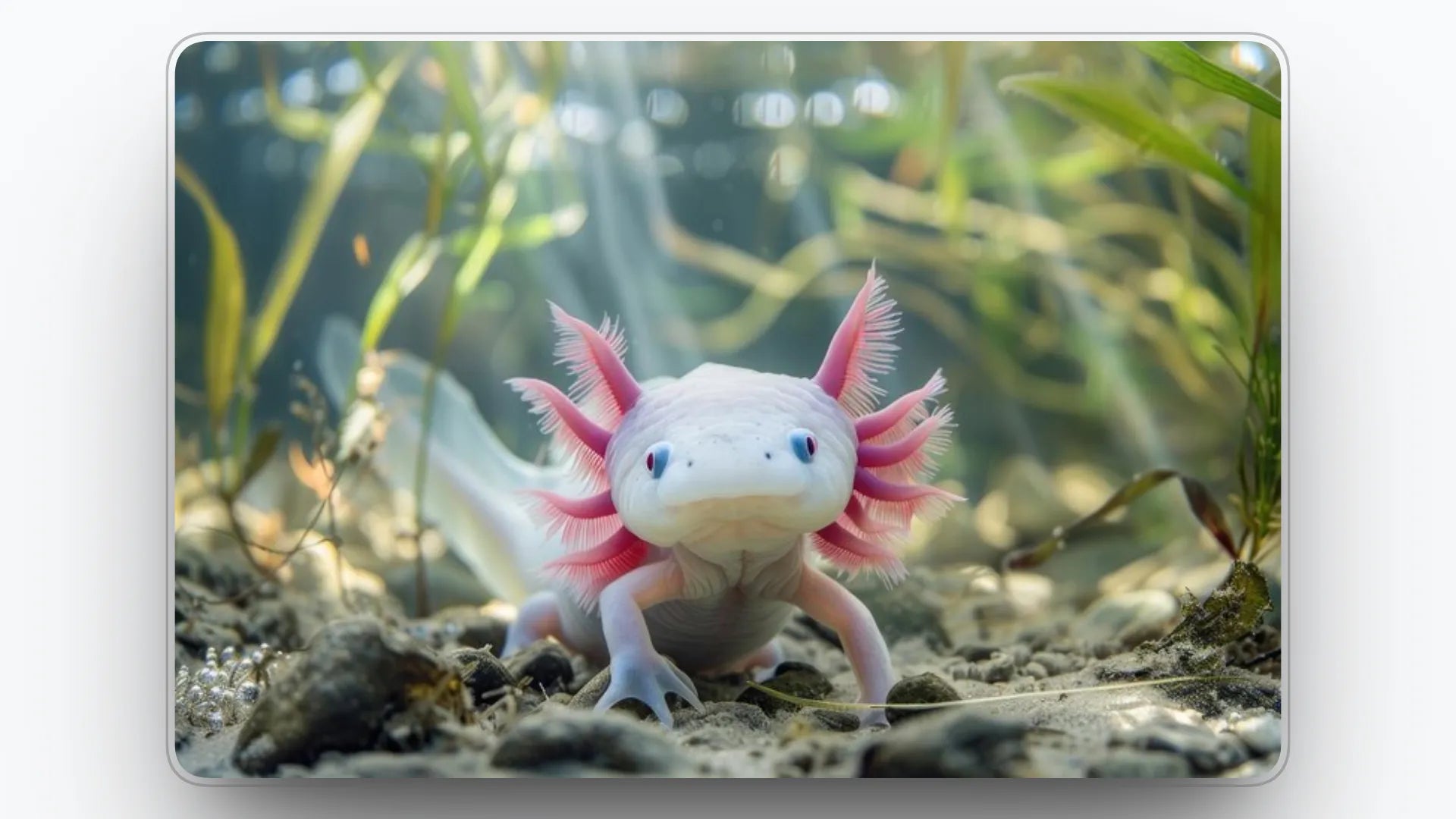
Leucistics can look almost pure white in bright lighting, but softer light often shows more pink tone through the skin. Some develop light freckling as they grow, which can surprise new owners. Their gills are usually the most vivid feature and often look brighter than the body. Clear daylight photos are usually the easiest way to judge the true tone.
- What it looks like: Pink or white body that may be solid or lightly speckled
- Eye clue: Dark eyes, the fastest way to confirm leucistic
- Often confused with: Albino, because both can look very light
- How common it is: Very common
- Common combos: GFP leucistic, dirty leucistic, leucistic with light freckling
3. Albino
Albinos often look extra bright on camera, especially under strong tank lights, which can hide subtle details. In person, many look more cream than pure white. Lighting glare can make them look “washed out” in photos, so a neutral white light is best for a true view. A short daylight video usually shows their real color more accurately.
- What it looks like: White or pale cream body with very light shading
- Eye clue: Light or red eyes
- Often confused with: Leucistic, especially in bright photos
- How common it is: Common
- Common combos: GFP albino, albino melanoid
4. Golden Albino
Golden albinos often look more “gold” as they mature, so juveniles can appear paler at first. Warm room lighting can make the yellow tone look stronger than it really is. Tank backgrounds like tan sand or warm decor can also enhance the golden look. A neutral light check helps confirm how warm the base color truly is.
- What it looks like: Yellow to golden body, sometimes with a shiny glow
- Eye clue: Light or red eyes
- Often confused with: Leucistic in warm lighting, or very pale juveniles
- How common it is: Common
- Common combos: GFP golden albino, golden albino with slight freckling
5. Melanoid
Melanoids are often photographed as very solid and dark, especially in low light. They can look like a smooth silhouette in many tank setups, which is why people like them for a dramatic look. Small details are easier to notice in bright, neutral lighting. This morph tends to look consistently dark across different photos.
- What it looks like: Deep dark body with a more even color
- Eye clue: Dark eyes
- Often confused with: Wild type, because both can be dark
- How common it is: Sometimes uncommon
- Common combos: GFP melanoid, albino melanoid
6. Axanthic
Axanthic axolotls are very lighting-sensitive, so they can look gray in one photo and “blue” in another. Cool LEDs and phone cameras often push them toward a bluish tone online. In person, many have a smoky, steel-like look that stands out from warmer morphs. A simple white light view is the best way to check the true shade.
- What it looks like: Gray, silver, or slate tones with little yellow
- Eye clue: Usually dark eyes
- Often confused with: Lavender or light melanoid, depending on lighting
- How common it is: Sometimes uncommon to often rare
- Common combos: Axanthic copper, melanoid axanthic, axanthic with GFP
7. Copper
Copper can be tricky to capture in photos because cameras often dull warm tones. In person, the color can look peachy, rusty, or softly orange depending on the individual. A plain, neutral background makes the warmth easier to see. Side-by-side with a wild type, copper usually looks noticeably warmer.
- What it looks like: Warm brown or orange tint with softer shading
- Eye clue: Often a red shine in the pupil when light hits the eye
- Often confused with: Wild type, especially if the wild type is lighter
- How common it is: Often rare
- Common combos: GFP copper, axanthic copper
8. GFP
GFP is easiest to confirm with a short video under a safe blue aquarium light. The glow should look clearly green, not just “brighter” than normal. Glow often shows strongly on the body and can pop on the gills as well. Avoid strong UV and stick to lighting meant for aquarium viewing.
- What it looks like: Glows under blue light, often brightest on the body and gills
- Eye clue: Eye color depends on the base morph, so it is not a reliable GFP clue
- Often confused with: Non GFP axolotls in normal light
- How common it is: Sometimes uncommon
- Common combos: GFP leucistic, GFP albino, GFP golden albino, GFP copper
Quick tip: To check for GFP, use a blue light and look for a clear green glow, not just “bright” colors.
Special Looks People Often Ask About
These are not always separate base colors. Many are patterns or special looks that can show up on top of the main morphs. Names can vary by breeder, so focus on what you see on the body.
Dirty Leucistic
A dirty leucistic is a leucistic axolotl that develops extra spots or freckles, often on the head and back. Look for a light pink or white body with dark eyes and more speckling than a typical leucistic.
Piebald
A piebald axolotl has clear patches of darker pigment on a lighter body. Look for larger patch shapes, not small freckles or fine speckles.
Mosaic and Chimera
These are very rare and often look unique from one axolotl to the next. Look for two clearly different looks on one body, like a split pattern or mixed patches that do not match the usual morph style.
Lavender
Lavender is a name some breeders use for a pale gray or purple gray look. Because the term is used loosely, it helps to compare the axolotl to known traits like axanthic or melanoid when you are trying to identify it.
Common Combo Morphs
Combo morphs are just two traits together. The name usually tells you which traits were mixed. Combo names can vary by breeder, but the traits are the same. If GFP is in the name, it should glow under blue light.
- GFP Leucistic: A leucistic axolotl with the GFP glow trait
- GFP Albino: An albino axolotl that also glows under blue light
- GFP Golden Albino: A golden albino with the GFP glow trait
- GFP Copper: A copper axolotl with the GFP glow trait
- Axanthic Copper: Copper tones with a more muted, grayish look from axanthic
- Albino Melanoid: Very light overall, with a more solid look than many albinos
- Melanoid Axanthic: Dark and cool toned, with less yellow pigment
- Melanoid Axanthic Copper: A muted, darker look with warmer copper tones underneath
How to Tell Your Axolotl’s Color
Use this quick checklist to identify your axolotl in under a minute. Check in normal room light first, because photos and tank lighting can change how colors look. If you want a faster way to separate similar-looking types (especially when sellers label them differently), use this morph identification checklist to compare eye color, shine, and pattern in a more step-by-step way.
Step 1 Check the Eyes
- Dark eyes: Often leucistic or wild type
- Light or red eyes: Often albino types, including golden albino
Step 2 Match the Body Color
- Dark brown or green with speckles: Usually wild type
- Pink or white: Usually leucistic
- Bright white or yellow or gold: Usually albino or golden albino
- Gray or silver with little yellow: Often axanthic
- Warm brown or orange tint: Often copper
Step 3 Check for Glow
- If it glows green under a blue light, it likely has GFP
- If it does not glow, it is likely not GFP
- Use a safe blue aquarium light, not strong UV.
Quick Checks for Common Mix Ups
- Leucistic vs Albino: Dark eyes usually means leucistic, light or red eyes usually means albino
- Wild type vs Melanoid: Wild type often shows more speckling and mixed tones, while melanoid looks more solid and less shiny
Do Axolotls Change Color?
Yes, an axolotl can look lighter or darker depending on lighting, tank background, age, and mood. The main morph does not change, but spots and shading can become easier to notice as it grows.
Which Color is Best?
The best color is the one you like, because health and good care matter more than color. If you want a simple way to choose, use these quick tips.
- For beginners: Common morphs are easier to find and compare
- For your budget: Rarer morphs usually cost more
- For easy ID: Leucistic and golden albino are easy to recognize
- For tank style: Dark morphs pop in light tanks, light morphs pop in dark tanks
- Most important: Choose a healthy axolotl from a trusted breeder such as Axolotl Planet, with clear photos, good reviews, and a live arrival guarantee.
FAQs
What colors do axolotls come in?
Axolotls come in core morphs like wild type, leucistic, albino, golden albino, melanoid, axanthic, copper, and GFP. Many other looks are combo morphs made by mixing two traits.
Is Leucistic the same as albino?
No. Leucistic axolotls usually have dark eyes, while albino types usually have light or red eyes. Both can look very light, so eye color is the easiest clue.
What color are axolotls in the wild?
Wild axolotls are usually dark to help them blend in, often with speckles and mixed tones. Bright white, pink, and golden colors are mostly seen in captive bred axolotls.
Do axolotls change color as they grow?
They can look lighter or darker depending on lighting, tank background, and age. Their main morph does not change, but spotting and shading can become more noticeable over time.
What does GFP mean in axolotls?
GFP is a glow trait, not a base color. A GFP axolotl can look normal in daylight, but it should glow green under a safe blue aquarium light.
What are the rarest axolotl colors?
Rarity depends on breeder lines and what is available in your area. In general, some combo morphs and special looks are harder to find than common morphs like leucistic or albino.

Leave a comment
This site is protected by hCaptcha and the hCaptcha Privacy Policy and Terms of Service apply.