

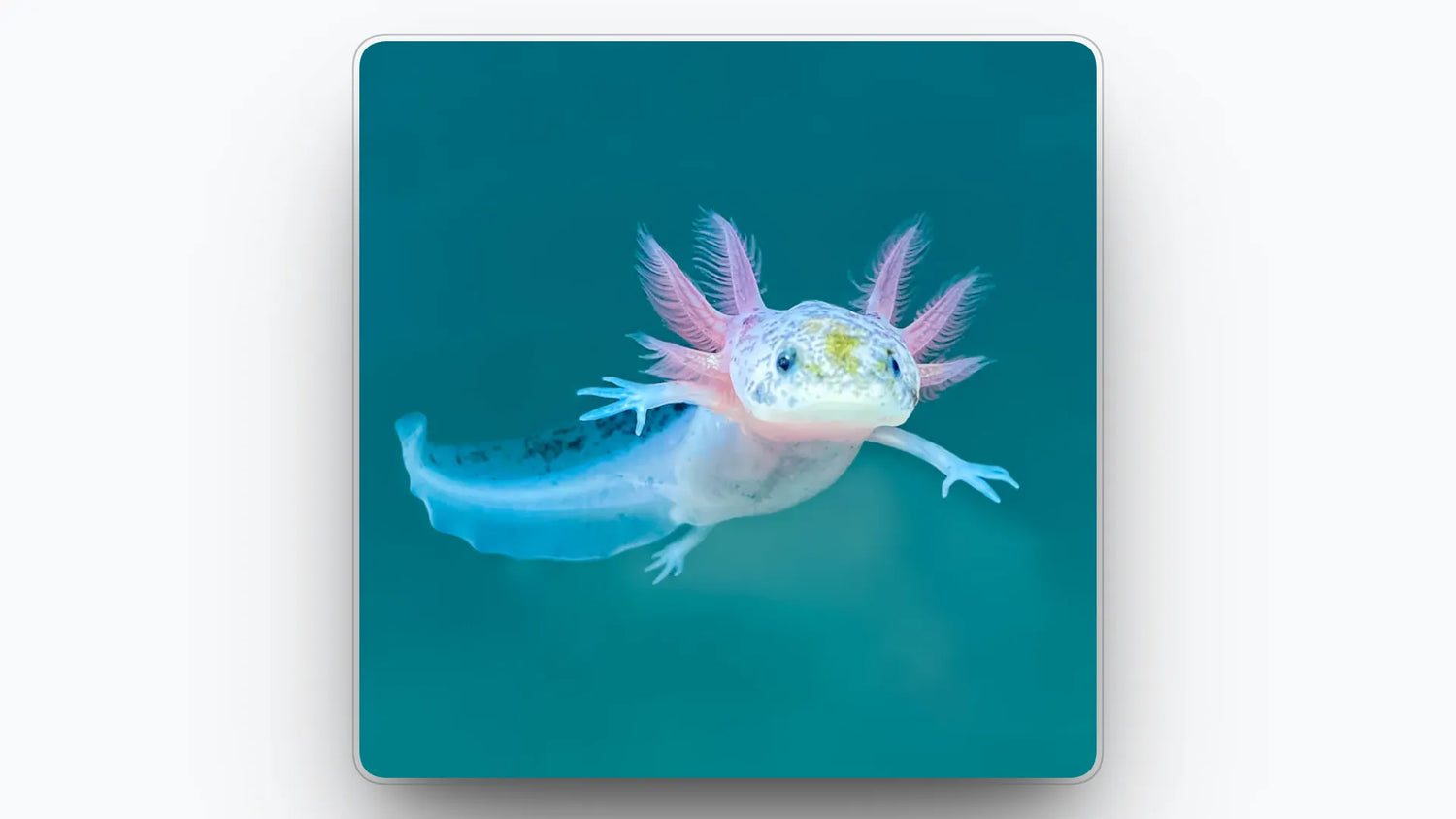
A dirty leucistic axolotl, often called a Dirty Lucy, is a leucistic axolotl with visible dark speckling or freckles, usually on the head and along the back. The base body color stays light, so the spots stand out compared to a clean leucistic.
A leucistic axolotl typically has a white to light pink body and dark eyes, which helps distinguish it from albino types that often have lighter eyes.
Quick ID checklist
- Freckles, flecks, or light peppering on the head or back
- Spot pattern can be light or heavy
- Gills often look pink or red in light morphs
- Spots can look different from one axolotl to another
- Dirty leucistic is a leucistic look, not a separate species
In this guide, you will learn the 7 key traits that identify a dirty leucistic, how it compares to similar morphs, and a simple care checklist.
What “dirty leucistic” means
A dirty leucistic axolotl is a leucistic axolotl that shows visible dark speckling or freckles on a light body. Many keepers call it a Dirty Lucy because it looks like a “Lucy” with extra spotting.
A standard leucistic axolotl is usually white to pale pink and has dark eyes, which is a key difference from albino types.
The word dirty does not mean the axolotl is unclean or sick. It only describes the extra dark pigment you can see, most often on the head and back area.
What it does not mean
- It is not a different species, and it does not change basic care needs.
- It is not automatically a sign of fungus, injury, or poor water quality. The pattern looks like flat speckles, not fuzzy patches.
7 Traits that Help you Identify a Dirty Leucistic Fast
A dirty leucistic axolotl is still a leucistic axolotl. It has a light body and dark eyes, but it also shows visible dark speckling on the upper body.
- Light base color (white to pale pink)
- Dark eyes
- Freckles or flecks on the face
- Speckling shows more on the top than the underside
- Spot pattern varies a lot between individuals
- Pink to red external gills are common in light morphs
- Spots look flat and smooth, not fuzzy or raised
1) Light base color (white to pale pink)
A dirty leucistic axolotl has the same light base color as a standard leucistic. Most look white, creamy, or pale pink, especially under cool lighting and clear water.
That light base makes the spotting easier to see. On a pale body, even small pigment marks can stand out, which is why this morph often looks "freckled" from a distance.
2) Dark eyes
Leucistic axolotls typically have dark eyes, which is one of the quickest checks you can do. If the body is light and the eyes are dark, you are usually looking at a leucistic type.
This matters because people often confuse leucistic with albino. Eye color helps you separate those two looks before you judge the speckling pattern.
3) Freckles or flecks on the face
Many dirty leucistics show freckles around the head area first. You may see small dots near the cheeks, around the eyes, or on the top of the head.
Face spotting is useful because it is easy to confirm during normal feeding and tank checks. You do not need to handle the axolotl to see it, which helps reduce stress.
4) Speckling shows more on the top than the underside
Dirty leucistic spotting often shows most on the top side, especially on the head and along the back. The underside and belly usually stay cleaner and lighter.
This top side pattern is one reason the morph can look more "dirty" from above than from below. If most marks are on the underside, you may be seeing normal skin tones through a pale body rather than true speckling.
5) Spot pattern varies a lot between individuals
Some dirty leucistics have just a few freckles. Others have heavier speckling that spreads across the back and sides. Both can still fit the dirty leucistic look.
Variation is normal, so do not expect one exact template. Focus on the combination of a light base body plus visible dark speckling, not an identical spot map.
6) Pink to red external gills are common in light morphs
Many light morph axolotls have gills that look pink or red. On a pale body, that color can look brighter, especially when the axolotl is active.
Gill color can shift with lighting, water conditions, temperature, and stress. Treat it as a supporting trait, not a defining one, and always confirm the morph using the body and spotting pattern.
7) Spots look flat and smooth, not fuzzy or raised
Dirty leucistic speckles are pigment marks in the skin. They look flat, smooth, and part of the normal pattern, like freckles on the surface.
If you see fuzzy patches, cottony growth, or raised areas, treat that as a possible health issue, not a morph trait. Normal freckles do not look like a film or tuft, and they do not spread suddenly overnight.
Dirty Leucistic vs Similar Morphs (Quick Table)
|
Morph |
Base look |
Markings |
Eye clue |
Fast way to confirm |
|
Dirty leucistic |
White to pink body |
Scattered dark pigment on face and back |
Pigmented eyes, often black or sometimes blue |
Light body + dark eyes + freckles on the top side |
|
Clean leucistic |
White to pink body |
Little or no melanin on body |
Pigmented eyes |
Light body + dark eyes with minimal freckling |
|
Albino (golden or white albino) |
Very light body, often yellow tones in golden albino |
No dark melanin patterning |
Eyes are not dark like leucistic; albinism removes melanophores |
Check the eyes first, then confirm the body lacks dark pigment |
|
Copper |
Pale copper to caramel body |
Speckling can be present |
Red tinted or red reflective pupils |
Warm caramel tone + red pupil under bright light |
|
Leucistic copper |
Light body like leucistic |
If “dirty,” spots trend chocolate brown |
Light eyes with red pupil |
Light body + lighter eyes, red pupil, brown toned spots |
|
GFP dirty leucistic |
Dirty leucistic in normal light |
Same freckles plus GFP trait |
Pigmented eyes, plus glow under blue light |
Confirm dirty leucistic traits, then test for green fluorescence under blue aquarium light |
|
Piebald |
Mixed pigmentation areas |
Coloration not limited to the top like leucistic |
Eye color varies |
Look for larger, irregular pigmented areas that extend beyond the top side |
|
Mosaic |
Patchwork look |
Mixed colors and irregular pattern blocks |
Eye color varies |
Look for clear patchwork sections, not simple freckling |
.
Dirty Leucistic Axolotl Care Checklist
Use this checklist to set up a safe tank and keep daily care simple. Dirty leucistic axolotls need the same basic care as other healthy axolotls, so water quality and temperature matter more than the morph.
Tank and setup
- Use an appropriately sized tank with plenty of floor space
- Add at least one solid hide so your axolotl can rest in low light
- Keep water flow gentle since strong current can cause stress
- Use safe substrate choices for the axolotl’s size, or a bare bottom setup if needed
- Keep lighting low and provide shaded areas
Water and temperature
- Keep the water cool and stable
- Use a water conditioner that removes chlorine and chloramine
- Keep ammonia at 0 and nitrite at 0 in a fully cycled tank
- Keep nitrate low with routine water changes
- Test water regularly with a reliable test kit
Feeding
- Feed a consistent staple diet that matches your axolotl’s size
- Remove leftover food so it does not foul the water
- Adjust feeding frequency based on age and body condition
Handling and stress
- Avoid handling unless it is truly necessary
- Use a soft container to move your axolotl if you need to relocate it
- Keep the tank in a quiet area away from vibration and sudden light changes
Health checks
- Check gills, skin, and appetite during feeding
- Watch for fuzzy patches, rapid color change, or unusual floating
- Act quickly if water parameters are off, since water issues are a common cause of stress
How to Choose a Healthy Dirty Leucistic
A dirty leucistic is a color look, not a health label. When you buy one, focus on the same basics you would use for any axolotl: clear skin, healthy gills, normal posture, and a seller who can answer simple care questions.
A good seller will tell you the axolotl’s approximate age, current diet, and typical water temperature. They should also explain how they ship and what support they offer if the animal arrives stressed.
Quick health checklist before you buy
- Gills look full and feathery, not thin or frayed
- Skin looks smooth with no cottony or fuzzy patches
- Body looks filled out, not sharp or sunken
- Movement looks steady and calm, not frantic or constantly surfacing
- No fresh wounds, missing limbs, or bitten gills
Photos and videos to request
- Top view of the full body
- Side view of the body and tail
- Close up of the gills and face
- Short video of normal swimming and resting
Questions that reveal a good breeder fast
- What is the current diet and how often is it eating
- What water temperature range is it kept in
- Is the tank fully cycled, and what water conditioner is used
- Has it had fungus, injuries, or appetite issues
- What is the acclimation process after shipping
Keep new axolotls alone at first and monitor gills, skin, and appetite closely. If you want a quick reference for early warning signs, use our 18 Axolotl Diseases guide so you know what is normal and what needs action.
If you are ready to choose one now, you can shop Dirty Leucistic Axolotls at Axolotl Planet and pick a listing with clear photos, size details, and shipping terms before you buy.
FAQs
What is a dirty leucistic axolotl?
A dirty leucistic axolotl is a leucistic axolotl with visible dark freckles or speckling, usually on the head and back. Many keepers also call it a Dirty Lucy.
Is a dirty leucistic the same as a leucistic?
Yes. Dirty leucistic is a leucistic look with added speckling. A clean leucistic has the same light base color and dark eyes, but little or no freckling.
Is a dirty leucistic axolotl albino?
No. Leucistic axolotls typically have dark eyes, while albino types often have lighter eyes. Eye color is one of the quickest ways to tell them apart.
Do dirty leucistic spots change as it grows?
They can. Some axolotls show more speckling over time, while others keep a similar pattern. Two dirty leucistics can also look different from each other.
How do I tell freckles from a health problem?
Freckles look flat and smooth, like pigment in the skin. Health issues often look fuzzy, cottony, raised, or appear suddenly along with stress signs like poor appetite.
Does a dirty leucistic need different care than other axolotls?
No. Care is the same as other healthy axolotls. Cool, stable water and a fully cycled tank matter more than the morph.


Leave a comment
This site is protected by hCaptcha and the hCaptcha Privacy Policy and Terms of Service apply.