

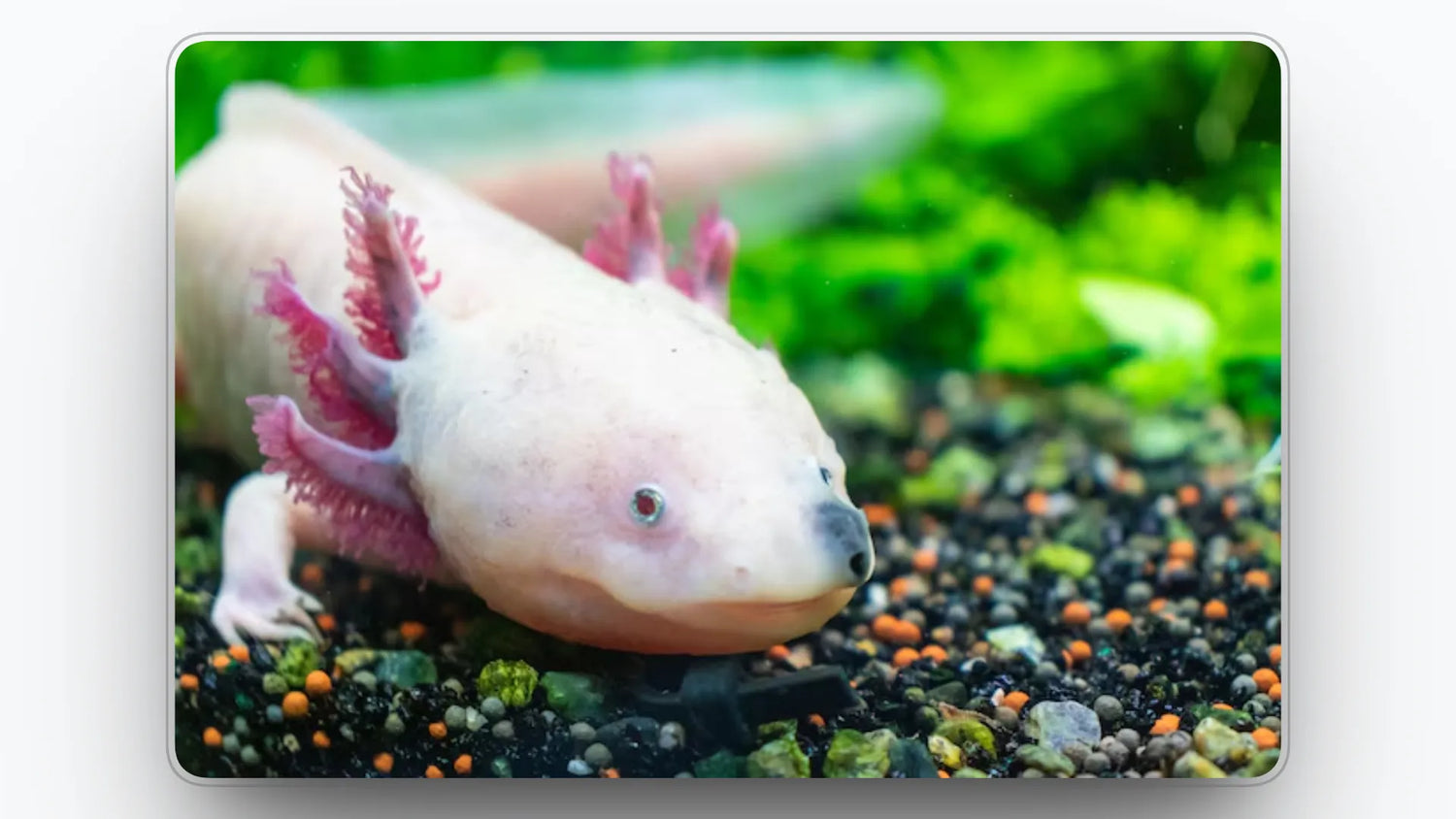
No. An axolotl should not live in a terrarium. Axolotls remain aquatic their entire life, so they need an aquarium or another fully water-safe setup that supports stable water conditions.
This question comes up when someone already owns a terrarium, has limited space, or wants a habitat that looks tidy and natural in a room. It is also common to worry that an aquarium will cost more or feel harder to manage. Those concerns make sense, but the enclosure type changes water volume, temperature stability, and filtration options.
In this guide, you will learn why terrariums are a poor fit for axolotls, what to use instead, and the core setup choices that help keep water stable and safe for daily care.
Terrarium vs Aquarium for Axolotls
A terrarium is designed for air-based habitats, while an aquarium is designed to hold water for aquatic organisms. Axolotls remain aquatic for life, so an aquarium-style setup matches their basic needs.
What a terrarium is designed for
A terrarium is a transparent enclosure made to keep plants or terrestrial and semi-terrestrial animals indoors. It is meant to manage air flow and, in many setups, humidity.
Because of that design, a terrarium is not built around long-term water volume, filtration space, or stable water conditions.
What an aquarium is designed for
An aquarium is a container made to maintain aquatic organisms, like fish and aquatic plants, in a water-filled environment. It is designed around holding water safely and keeping aquatic life in stable conditions.
That is why aquariums support the equipment axolotls depend on, like filtration, water testing, and temperature control.
Quick comparison table
|
Feature |
Terrarium |
Aquarium |
|
Water volume |
Not intended for full-time water |
Designed for full-time water |
|
Filtration |
Not built for long-term aquatic filtration |
Built to support filtration and water care equipment |
|
Temperature stability |
Weaker, air setup shifts faster |
Stronger, larger water volume holds steady longer |
|
Safety for water use |
Higher risk if it is not rated to hold water |
Safer for long-term water holding by design |
Why Axolotls do not Belong in a Terrarium
Axolotls are aquatic animals that depend on stable, clean, cool water every day. A terrarium is built for air-based habitats, so it often makes water stability, cooling, and leak safety harder than it needs to be.
Axolotls are fully aquatic
Axolotls live in water full time. Adults stay aquatic and keep gills, instead of switching to a land life like many other amphibians. The species name is Ambystoma mexicanum.
Terrariums often fail at water safety
Many terrariums are designed for soil, plants, and humidity, not for holding large amounts of water long term. When a container is not rated for constant water pressure, problems like slow leaks and weak seals become more likely.
Even a small leak can damage floors, shelves, and furniture, so the risk is practical, not theoretical.
Terrariums usually create the wrong environment
Axolotls do best in cool, stable water. Veterinary guidance lists an optimum temperature of 16 to 18°C and notes it should never exceed 24°C.
A USGS species profile also describes axolotls thriving in colder water between 16 to 20°C.
Waste management is harder in small, shallow setups
Smaller water volumes change faster. Temperature, waste levels, and water clarity can shift quickly, especially if feeding is heavy or filtration is limited.
A larger, water-safe aquarium setup gives you more room for filtration, more stable water volume, and easier daily care habits.
What to Use Instead of a Terrarium
Axolotls remain aquatic for life, so the safest choice is a setup designed to hold water full time. When you choose an aquarium-style enclosure, it is easier to keep water stable and reduce avoidable risks, like leaks and quick water swings.
If you like the look of a terrarium, you can still build a clean, “display” setup. The difference is that the enclosure must be designed for long-term water holding, and it must support water care habits that match an aquatic animal.
Best option: a standard aquarium with a wide footprint
Choose an aquarium that gives your axolotl more floor space, not just height. Axolotls spend much of their time on the bottom, so a wide layout supports more natural movement and makes it easier to place hides and feeding areas.
A standard aquarium also gives you practical advantages:
- Safer water holding by design: Aquariums are built to hold water as the main function.
- More stable conditions: More water volume usually changes more slowly than a shallow setup, which helps daily care feel more manageable.
- More room for gentle filtration: A proper filter choice matters for water care, but the main benefit here is that an aquarium gives you space to use equipment without crowding the animal.
If you want a simple, beginner-friendly layout, use this approach:
- Keep the bottom easy to clean.
- Add two or more hides so your axolotl can rest out of view.
- Leave an open area for feeding so leftover food is easier to spot and remove.
- Use a lid or cover that reduces evaporation and keeps pets or children from accessing the tank.
This option fits the basic fact that axolotls remain aquatic and need an enclosure that supports water stability.
Strong alternate: a water-safe tub setup
A large plastic tub can work if it is truly water-safe and made to hold water long term. This can be useful for short-term housing, such as transport, quarantine, or while you set up an aquarium.
If you choose a tub, treat it like an aquarium, not like a terrarium:
- Pick a tub that is rigid and does not bow when filled.
- Use a secure lid that allows airflow without letting the tub dry out too fast.
- Place it in a cool, stable part of the home away from direct sun.
- Keep the setup simple so cleaning is quick and consistent.
A tub can be practical, but it is not automatically easier. The goal is still stable water and routine maintenance that matches an aquatic animal.
Display option: a clean, minimalist aquarium setup
If your main concern is appearance, you can build a setup that looks tidy and still meets axolotl needs. You do not need a terrarium style to get a modern look.
A simple display plan:
- Use a wide aquarium and keep decor minimal.
- Choose two to three hides that look natural but are easy to rinse.
- Keep lighting low and avoid intense bright light.
- Maintain a clear feeding zone so you can remove waste and leftover food quickly.
This gives you the “room-friendly” look many people want, while still respecting the fact that axolotls are aquatic animals.
Option to avoid: terrarium conversions and paludarium-style setups
Many terrariums are designed for soil, plants, airflow, and humidity. They are not designed to hold a large water volume under constant pressure. Even if a terrarium holds water for a while, the long-term risk can be higher if it was not built and rated for that use.
Paludarium-style builds can also create confusion. A paludarium is often designed for a mix of land and water. Axolotls do not need a land area, so the land section does not add value, and it often reduces water volume.
If you already own a terrarium
Do not assume a terrarium can safely hold water full time. Check what the enclosure was designed for and what the manufacturer rates it for.
Use this simple rule:
- If it is clearly built and rated as an aquarium-style water-holding tank, you can treat it like an aquarium.
- If it is a standard terrarium built for land habitats, do not use it for an axolotl.
Choosing the right enclosure is not about being fancy. It is about picking a container designed for water life, because that is what an axolotl is built for.
Simple Axolotl Aquarium Setup Checklist
Use this checklist to build an aquarium setup that supports stable, safe water for Ambystoma mexicanum. Axolotls live in water full time, so your setup should prioritize cool temperature, clean water, and low stress.
Tank size basics
- Use an aquarium built to hold water long term. Axolotls should be housed in an aquarium because they are aquatic.
- Choose floor space over height. Axolotls spend most of their time on the bottom, so a wide footprint helps movement, feeding, and hiding.
- Size for an adult body length. Plan for adult size. Veterinary guidance notes adults can reach up to about 35 cm, while other veterinary guidance notes most adults are closer to about 23 to 25 cm. Choose a tank that does not feel cramped at full size.
- Plan for one axolotl per tank when possible. Tank sharing carries risk, especially with size differences.
Temperature
- Recommended range: 16 to 18°C (about 60 to 64°F).
- Preferred range is cool water, around 16 to 18°C.
- Avoid sustained warm temperatures. Veterinary guidance notes axolotls should never exceed 24°C, and warmer water increases stress and illness risk.
Filtration and flow
Clean water matters, but flow must stay gentle.
- Use a filter to keep ammonia low. Veterinary guidance strongly advises filtration to reduce toxic ammonia.
- Keep the flow gentle. Strong water flow can cause severe stress, so choose a setup you can baffle or diffuse.
- Still do routine water changes. A common baseline is 10% to 20% weekly, adjusted based on test results and your filter system.
Substrate
Your goal is to prevent swallowing hazards.
- Best choice: fine aquarium sand.
- Avoid gravel and small stones. Veterinary guidance warns axolotls can eat gravel and it can cause a fatal obstruction.
- If you use décor rocks, use large pieces only and keep the floor easy to clean.
Hides and light
Axolotls do best with cover and low light.
- Add hides like caves or pipes so your axolotl can retreat out of sight.
- Keep lighting low. Veterinary guidance notes sensitivity to sudden lighting changes and UVB radiation, and many tanks are left unlit.
- Place the tank in a quiet, vibration-free area to reduce stress.
Water prep
Tap water needs preparation before it touches the tank.
- Remove chlorine before use. Chlorine in tap water is harmful, so use a dechlorinator or age the water as directed.
- If your water supplier uses chloramines, use a dechlorinator.
Cycling and testing
- Do not add an axolotl to a brand-new setup. Leave time for the tank to mature and confirm stable water quality with testing before the axolotl is added. This reduces instability in a brand-new system.
- Test water regularly, especially early on. The goal is to prevent waste compounds from building up.
Common Terrarium Mistakes to Avoid
- Using a terrarium as the main enclosure. Axolotls remain aquatic for life and need an aquarium-style setup.
- Adding a land area or dry zone. Axolotls do not need land, and it often reduces water volume and stability.
- Using heat lamps or keeping the setup in a warm spot. Axolotls do best in cool water, and warm setups can stress them.
- Relying on shallow water with limited filtration space. Smaller water volumes tend to change faster and are harder to keep stable.
- Using gravel or small stones. Axolotls can swallow them when feeding, which can cause dangerous blockage.
- Skipping cycling and water testing. New tanks need time to stabilize before an axolotl is added.
- Keeping bright lights with no hides. Axolotls prefer low light and need hiding places to feel secure.
Get the Right Axolotl Setup Today
If you are setting up an axolotl for the first time, keep it simple. Focus on stable cool water, gentle filtration, and low light, then add a few hides and a clear feeding area. For a step-by-step plan, read our axolotl tank setup guide.
If you already bought a terrarium, do not force it to work as a water tank long term. Switch to an aquarium-style setup designed to hold water, then follow a basic checklist for temperature, substrate, and water testing. You can also shop curated essentials at Axolotl Planet.
FAQs
Can an axolotl live in a terrarium?
No. Axolotls remain aquatic their entire life, so they need a water-holding setup designed for stable aquatic conditions, not a land-style enclosure.
Do axolotls need a land area to climb out?
No. Axolotls stay aquatic as adults and keep their gills, so a dry land section is not a basic need. Land areas usually reduce water volume and make stability harder.
Can you convert a terrarium into an axolotl tank?
Only if it is truly built and rated to hold water long term. A terrarium is typically a box used for plants or small land animals indoors, while an aquarium is designed to maintain aquatic organisms in water.
What water temperature is best for axolotls?
Cool water is best. A USGS species profile notes axolotls thrive in colder water between about 16 to 20°C (about 61 to 68°F).
Can you keep an axolotl in a plastic tub instead of a tank?
Yes, if the tub is rigid, water-safe, and you manage it like an aquarium with stable cool water and routine maintenance. The goal is still consistent aquatic conditions for an animal that lives in water full time.
Can you keep live plants with axolotls?
Some keepers use hardy, low-light plants, but many setups stay simple. Axolotls are often kept in low light and can be sensitive to sudden lighting changes, so avoid intense lighting. If you add plants, choose low-light options and keep the layout easy to clean.


Leave a comment
This site is protected by hCaptcha and the hCaptcha Privacy Policy and Terms of Service apply.