


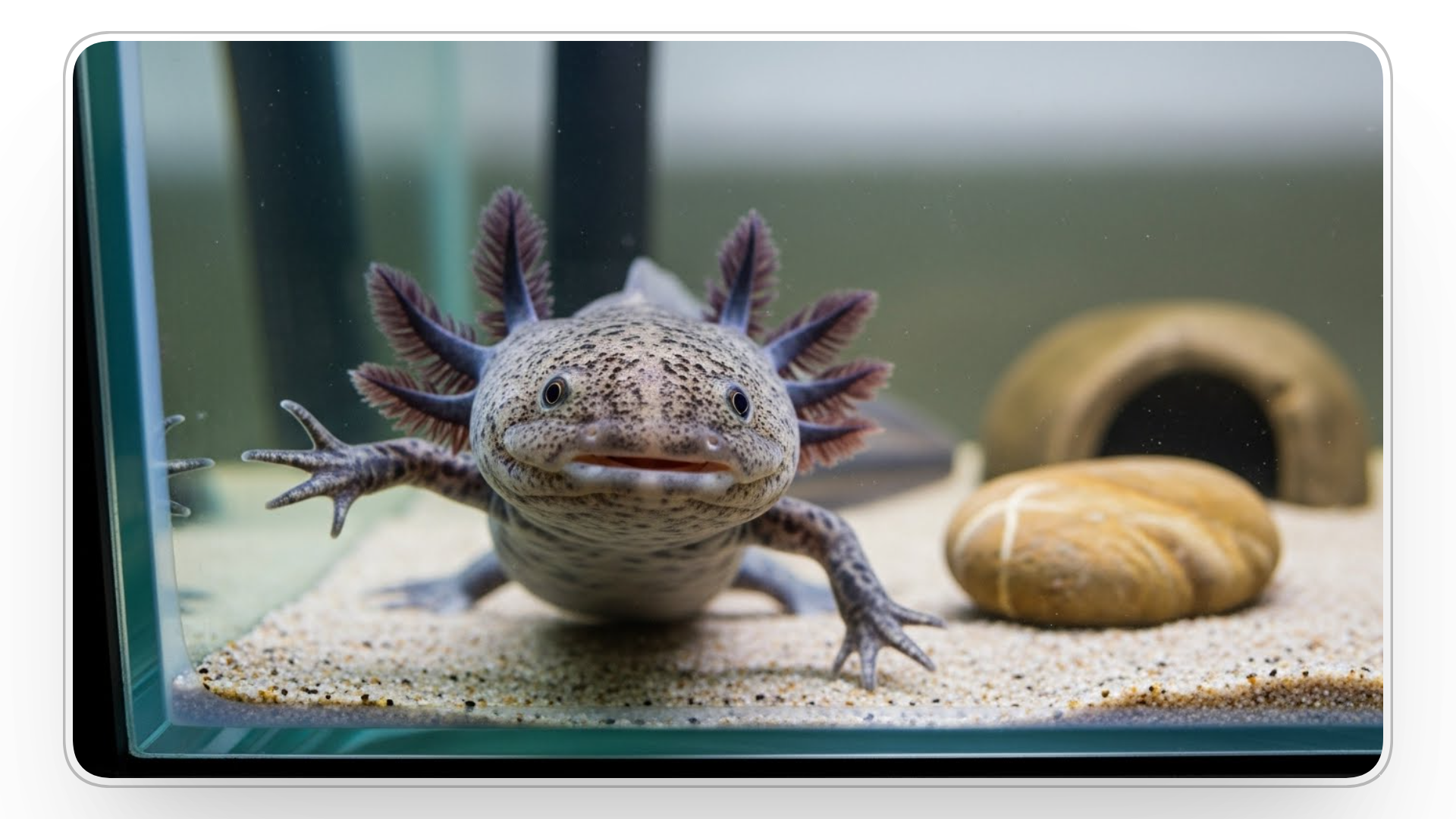
Wild type axolotls are the classic version of the species: dark, speckled, and closest to how axolotls look in nature. They are often cheaper and easier to find than rare color morphs, which makes them a very common first choice for new owners.
That easy access can hide real risks. A wild type axolotl from poor breeding, bad water, or rough handling may look fine in the shop but later develop problems such as curved spine, weak gills, infections, or chronic stress. Choosing a wild type axolotl is not only about picking the one you find cutest.
In this guide, we will walk through each of those steps in detail so you know exactly what to look for at every stage. You can read it straight through to understand the full picture, or skim the key points while you are in a shop or comparing online listings.
Wild Type Axolotl Rundown
|
Why The “Before You Buy” Step Matters
Most axolotl health issues link back to three things: genetics, water quality, and diet. Once an axolotl is in your care, you can improve water and feeding, but you cannot fix bad genes or completely undo months of stress in a poor setup.
Taking time before you choose a wild type axolotl helps you avoid animals that already show signs of illness or deformity, avoid supporting shops or breeders who keep axolotls badly, and start out with a stronger, more resilient animal. Good choices early on mean fewer emergency problems later, which is why what you do before you buy often matters as much as how you care for the axolotl after.
Step 1: Check Axolotl Legality and Life Fit
Before you fall in love with a specific wild type axolotl, confirm that you are actually allowed to keep one and that your life can support a cool water tank.
Some regions:
- Ban axolotls as pets
- Require permits or special paperwork
- Restrict shipping across state or national borders
A wild type is the same species, Ambystoma mexicanum, as any other morph. If axolotls are restricted, wild types are restricted too.
Quick legal and lifestyle checklist:
- Look up axolotl laws in your state, province, or country
- Check if permits are needed to own or transport them
- Think about your home: can you keep water cool and stable all year
- Make sure you have space for at least a 20 gallon (75 liter) tank for an adult
If you cannot pass this basic step, it is safer and kinder to hold off rather than bring home an animal that you cannot house correctly or legally.
Step 2: Learn What a Healthy Wild Type Axolotl Should Look Like

To choose a good wild type, you first need a clear picture of what a normal, healthy one looks like. Wild types have variety, but they share some common visual traits.
Most healthy wild type axolotls show:
- A dark base color, such as brown, olive, or charcoal
- Light speckling or mottling across the body
- Dark eyes, often with a faint gold or copper ring
- Darker gills, from deep red to nearly black, that match the overall tone
- A paler underside compared to the back and sides
Shops may use labels like “dark wild”, “light wild”, or “high contrast wild”. These are usually just descriptive names, not separate morphs. Do not get stuck on the label. Focus on whether the animal looks balanced, symmetrical, and clean.
Step 3: Assess Body Structure And Overall Condition
Once you know that the color and pattern fit a normal wild type, move on to body structure. Shape and posture can tell you a lot about genetics, growth, and early care.
Think of this as a careful scan from head to tail.
Spine and Tail
View the axolotl from the top and the side:
- The spine should appear as a smooth line without sharp kinks
- The tail fin should look even and continuous along its length
A gentle curve while moving is fine. A permanent sharp bend or “S” shape is not.
Limbs and Toes
Check the legs and feet:
- All four limbs should be present
- Toes should be visible on each foot
- Limbs should look similar on both sides of the body
An older axolotl might have a healed missing toe, especially if it grew up in a group. That alone is not a problem. Multiple missing or twisted limbs in a young animal, however, can signal poor conditions or genetic issues.
Body Thickness and Shape
Now step back and look at the whole body:
- Body width should be similar to or slightly wider than the width of the head
- The base of the tail should be smooth, not sharply pinched
- The belly should not hang heavily under the body or bulge hard out to the sides
If the axolotl looks very thin, with a narrow tail base and visible bones, it may be underfed or sick. If it looks extremely bloated or oddly swollen, there may be internal problems such as impaction, fluid buildup, or organ trouble.
Step 4: Inspect Skin, Gills, And Eyes Up Close

After you confirm the general shape looks good, look more closely at the skin, gills, and eyes. These details often show stress or infection before anything else.
Skin Health
In a healthy wild type:
- Skin appears smooth, even if the color is mottled or speckled
- There are no open sores, raw red patches, or bleeding areas
- There is no white, cotton like growth on the body or limbs
You do not see large cloudy or milky patches that stand out from the normal pattern
A few minor scars are common, especially in older or group raised axolotls. Active wounds, inflamed areas, or fuzzy growths need treatment and are not ideal in a new pet.
Gill Health
Gills are a clear indicator of water quality and overall condition.
Look for:
- Full gill stalks with feathery filaments
- Rich color appropriate for a wild type, from deep red to almost black
- Gills that sit gently out from the head and are not always clamped tight
Be cautious if:
- Gills are very short, reduced almost to nubs, which can show long term poor water care
- You see white fuzz, cotton like spots, or obvious growth on the gills
- Gills are constantly held tight against the head in a stiff, stressed manner
Eye Health
Healthy wild type eyes should:
- Be clear, not cloudy or milky
- Match each other in size and position
- Show no strong bulging, sunken look or obvious trauma
If one eye appears much larger than the other or if the eye surface is opaque, this may be a sign of injury, infection or a deeper issue.
If you’d like a more detailed visual breakdown of what healthy skin, gills, and eyes should look like, you can also use this external Fantaxies guide on axolotl external characteristics. It groups together in-depth articles on normal shapes, textures, and warning signs, so you can compare what you see on a wild type axolotl in person with clear, expert-backed examples.
Step 5: Observe Behavior And Movement
An axolotl can look fine on the surface but show serious problems through its behavior. After your visual checks, spend a moment just watching what it does.
Normal wild type axolotl behavior usually includes:
- Resting calmly on the bottom for long periods
- Walking or slowly swimming away if disturbed
- Using all four limbs in a coordinated way
- Controlled, smooth swimming when it chooses to move
Axolotls are not active fish. Being very calm is normal. The key point is that they can move properly when they want or need to.
Behavior signs that can signal trouble include:
- Floating at the surface and unable to stay down
- Frequent gasping at the surface without an obvious reason
- Spinning, rolling, or frantic darting that does not settle
- Lying on the side and not correcting posture
- Only one side of the body working when it tries to swim
These signs can point to gas problems, poor water quality, internal damage, or neurological issues. They are not good starting points for a new owner.
Step 6: Evaluate The Current Tank And Water

The environment an axolotl is in right now often tells you more about its past than the animal itself. Poor water and cramped tanks can stress even a well bred animal.
If you are in a shop, do not just look at the axolotl. Look at the whole tank. If you are buying online, ask for a photo or short video of the setup it is currently in.
Signs of a reasonably good tank:
- Water looks clear, not cloudy or filled with debris
- The tank does not have a strong or foul smell
- A filter is present and running with a gentle flow
- There are at least a few hides or plants for cover
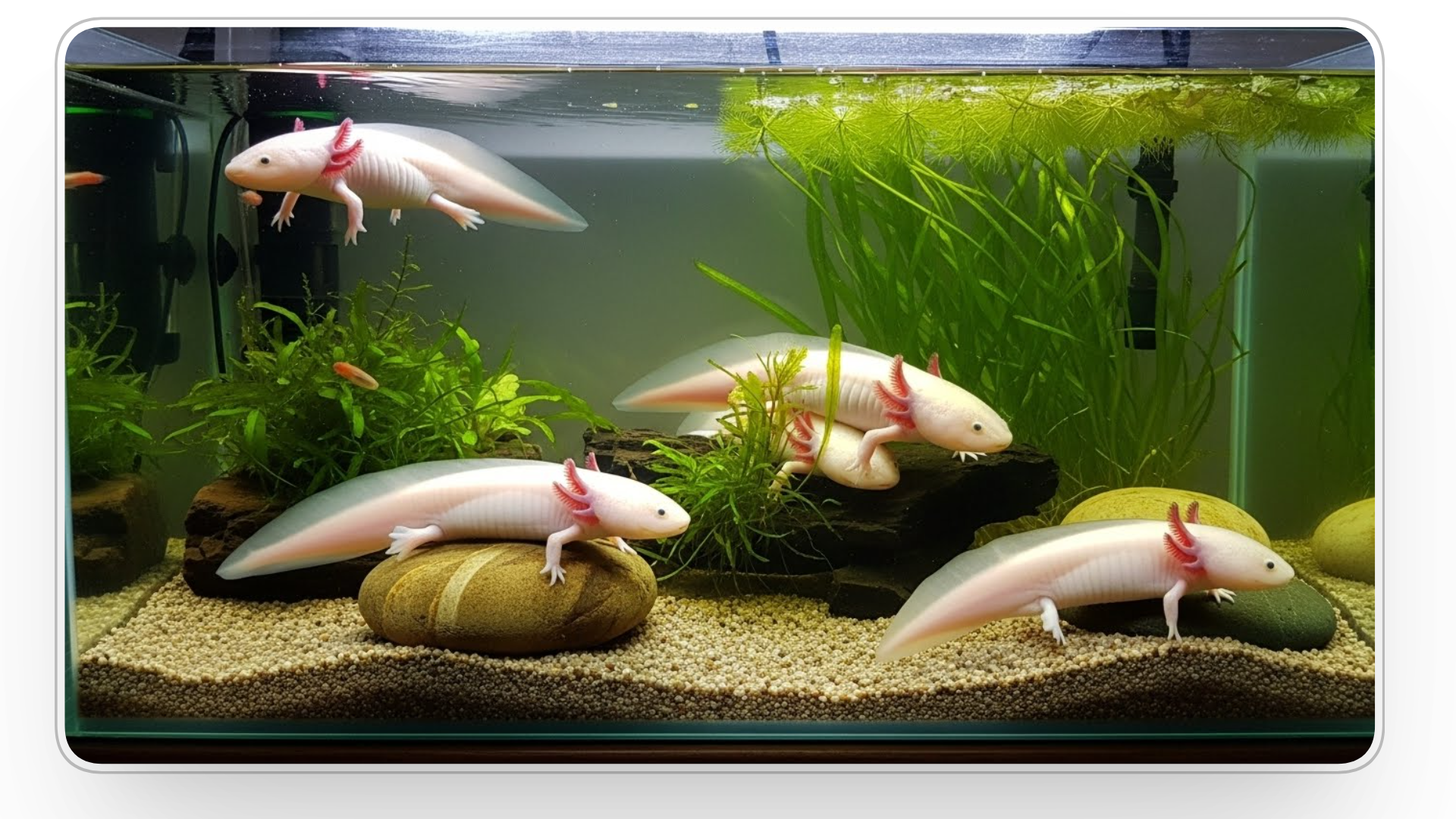
- Axolotls are not obviously over crowded
- Substrate is bare bottom, fine sand, or large rocks that cannot be swallowed
Red flags in the tank:
- Gravel or small stones that clearly fit in an axolotl’s mouth
- Many axolotls packed into a small, bare tank
- Hazy, dirty or smelly water
- Strong current that pushes the animals around
- Very bright light with no cover or hides
A shop or breeder keeping axolotls like this is likely cutting corners in other areas too, such as diet and health checks. It is usually safer to find another source.
Step 7: Ask The Right Questions To The Seller
Once a wild type axolotl passes your visual and tank checks, the next step is to talk to the person selling it. A good seller will answer basic questions without defensiveness and will show that they understand axolotl care.
Helpful questions to ask include:
- How old is this wild type axolotl
- What has it been eating, and how often
- What temperature is the tank kept at
- Has it ever been sick, injured, or treated for fungus or other issues
- Do you know if it is male or female, if age makes that possible
Good answers sound specific and straightforward. For example, “about eight months old, eating earthworms and pellets every two to three days, kept at around 64 to 66 degrees Fahrenheit” is a stronger answer than “not sure, we just feed whatever fish food and keep it room temp”.
If the seller cannot answer simple questions or seems annoyed that you care, this is a sign to be cautious.
Step 8: Make Sure Your Own Setup Is Ready
The final step before choosing a wild type axolotl is to look at yourself and your tank. Even a perfect axolotl will struggle in a tank that is too warm, too small, or not cycled.
Before you commit to any animal, check your own setup against this list.
Home tank readiness checklist:
- Tank is fully cycled, with 0 ammonia, 0 nitrite, and low nitrates
- Tank size is at least 20 gallons or 75 liters for one adult
- You have a filter with gentle flow or a way to reduce strong current
- You can keep water between about 60 and 68 degrees Fahrenheit (15 to 20 degrees Celsius)
- Substrate is safe: bare bottom, fine sand, or large stones that cannot fit in the mouth
- There are hides and decor without sharp edges or loose parts
- You have a water test kit and know how to use it
If you cannot honestly check these points right now, it is better to prepare the tank first and bring an axolotl home later. Many early health problems in axolotls come from being dropped straight into an uncycled or overheated tank.
Simple Quick Checklist For Choosing A Wild Type Axolotl
When you are actually in front of the tank or looking at an online listing, you can use this short list as a fast cross check.
Quick choice checklist:
- Legal in your area, and your tank at home is cycled and cool
- Looks like a typical wild type with dark base and speckling
- Spine and tail look straight and even
- Four limbs present, with normal toes and no fresh injuries
- Skin is smooth, with no open sores, fuzz or cloudy patches
- Gills are full, feathery and free of fungus
- Eyes are clear and matching
- Behavior is calm but responsive, with no constant floating or spinning
- Current tank water is clear, not crowded and not smelly
- Seller can answer basic questions about age, diet and care
If you can tick all of these boxes, you are in a much better position to bring home a healthy wild type axolotl.
FAQs
Are wild type axolotls easier to care for than other morphs?
Wild type axolotls need the same basic care as any other morph. They require cool, clean water, gentle flow, a meat based diet, and a suitable tank. Some wild type lines may be more robust than heavily inbred rare morph lines, but you should always assume that proper husbandry is the main factor in health, not color.
How much does a wild type axolotl usually cost?
Prices vary by region, but many shops list wild type axolotls in the range of about 20 to 60 dollars. Reputable breeders may charge around 30 to 90 dollars, depending on size, age, and demand. Very low prices from poor setups can seem attractive but often lead to hidden costs in vet care and losses later.
What size should a wild type axolotl be when I buy it?
For most new keepers, it is safer to choose a juvenile that is at least about 3 to 4 inches, or 7.5 to 10 centimeters, long. At this size, the axolotl should already be eating solid foods reliably and will usually handle shipping and tank changes better than tiny, translucent hatchling stage animals.
Can I keep a wild type with other axolotl morphs?
Yes, wild type axolotls can live with other morphs as long as the tank is large enough, water quality is high, and the animals are similar in size. Many keepers still prefer one axolotl per tank or very careful cohabitation because nipping and stress can happen between any colors.
Should I “rescue” an axolotl from a bad looking pet shop?
It is very tempting to rescue a wild type axolotl from poor conditions, but this can be risky if your own tank is not fully ready or if you have limited experience. Rescue animals often need strict quarantine, very clean water, and sometimes vet care. If you decide to rescue, treat it as a special project and not as a typical first pet.

Leave a comment
This site is protected by hCaptcha and the hCaptcha Privacy Policy and Terms of Service apply.