

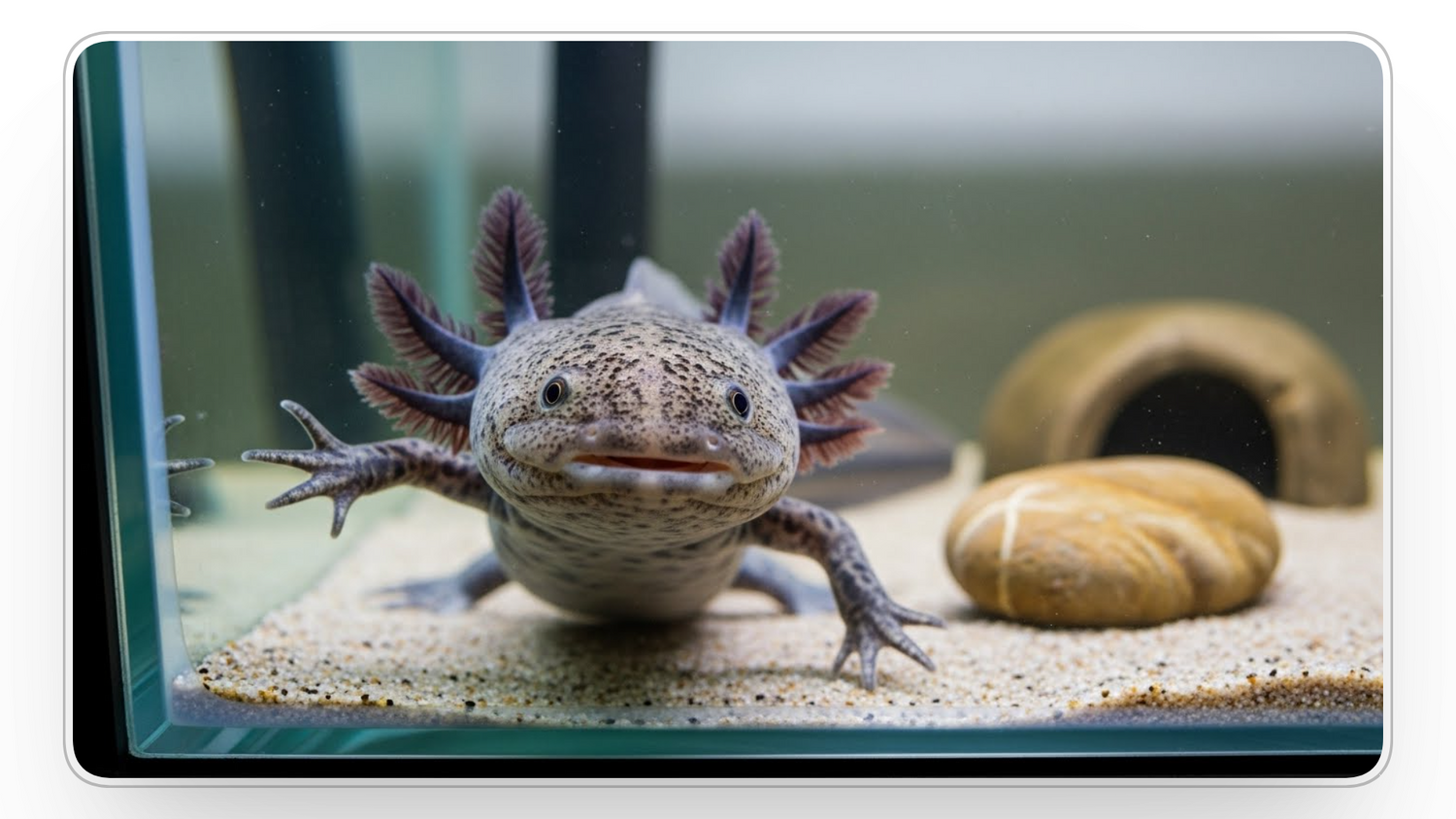
Axolotls look soft, slow, and harmless, so many new keepers are surprised when they see a sudden snap at a tank mate or feel a small grab on their fingers. This leads to a common worry: do axolotls bite, and is it something to be afraid of?
Axolotls do bite, but not in the way most people imagine. They do not have sharp, tearing teeth like many fish or reptiles. Instead, they have small, gripping structures and a powerful suction snap used to pull food into their mouths. That same feeding reflex can be triggered by tank mates, fingers, or anything that moves like food.
In this guide, we will look at why axolotls bite, what an axolotl bite feels like, how to prevent nips between axolotls, and how to lower the chance of your axolotl biting you during care. The goal is not to make you fear bites, but to understand and manage them so both you and your axolotl stay safe.
Axolotls Bit Rundown
|
Do Axolotls Bite Humans?

Yes, axolotls can and do bite human fingers and hands, but it is almost never an act of aggression. An axolotl does not see you as prey or an enemy. It reacts to movement near its face with a fast suction snap, the same way it reacts to a worm or pellet.
Most human bites happen when:
- You hand feed directly with bare fingers
- Your fingers move close to the mouth when cleaning or arranging decor
- You are slow to move away while the axolotl is in a strong feeding mode
When an axolotl bites you, it is almost always a case of mistaken identity. It thinks your finger is food, grabs, realizes it is not, and lets go.
What Does an Axolotl Bite Feel Like?
For most people, an axolotl bite feels more like a quick pinch or suction than a sharp cut. Because their mouth and “teeth” are built to grip soft prey rather than slice, they rarely break human skin.
Typical bite sensations:
- A fast, surprising “pop” or suction feeling
- Mild pressure or pinch without real pain
- Sometimes a brief sting if they catch a hangnail or soft spot
If the skin is not broken, you usually do not need to do anything special. If there is a small break in the skin, rinse your finger with clean water and mild soap, and keep an eye out for irritation just as you would for any small scratch.
Do Axolotls Bite Each Other?

Yes, axolotls will bite each other, especially when they are young or kept in tight spaces. Nipping is one of the main risks of keeping more than one axolotl in the same tank.
Common bite targets between axolotls include:
- Gills
- Tails
- Toes and feet
- Sides and fins
Nips can range from tiny marks to missing limbs or serious wounds. Although axolotls can regenerate lost parts, constant biting is stressful and can lead to infections and long-term problems.
Common Causes of Axolotl Biting
Biting almost always ties back to natural behavior and environment rather than “meanness.” Here are the most common reasons axolotls bite.
1. Mistaking Something for Food
Axolotls use sight and movement to detect food. Anything that looks or moves like prey can trigger a snap.
They may bite when:
- Fingers wiggle near their face during feeding
- Tank mates move suddenly in front of them
- Loose decor, tubing, or floating items drift past their mouth
To the axolotl, it is just “something small moved, grab it now.”
2. Hunger and Feeding Response
A very hungry axolotl is more likely to snap at anything close to the mouth area. If food has been irregular or portions too small, feeding times can become frantic.
Signs that hunger is driving biting:
- Lunging at your fingers every time you open the lid
- Snapping at non-food items in the tank
- Aggressive grabbing of tank mates at feeding time
3. Crowding and Poor Tank Setup
In a crowded or bare tank, axolotls are more likely to bump into each other and lash out with a reflexive nip.
Risk factors include:
- Multiple axolotls in a tank that is too small
- No real hiding spots or visual barriers
- Strong current that pushes them into one another
Close contact, plus poor sight and fast feeding reflex, can quickly turn into missing gills or toes.
If you want even more detail on nipping, cohabitation risks, and how to stop repeated bites before they turn into serious injuries, you can also read Fantaxies’ guide, Nipping in Axolotls: How to Prevent It, and use it alongside this article when you decide whether to keep axolotls together or separate.
4. Size Differences Between Tank Mates
Axolotls can and do eat smaller axolotls if the size gap is large enough. Even if they do not swallow each other whole, larger individuals may bite limbs, tails, or gills off smaller tank mates.
A rough rule many keepers use: if one axolotl could fit the head of another into its mouth, the size difference is too large for safe cohabitation.
5. Stress and Poor Water Quality
A stressed axolotl is more reactive. Poor water quality, inappropriate temperature, and loud surroundings can all increase tension and erratic behavior. While this is a less direct cause than “looks like food,” it still plays a role.
Possible stress-related bite triggers:
- Overheating, often above the low 70s Fahrenheit
- High ammonia, nitrite, or nitrate levels
- Constant bright light with nowhere to hide
Are Axolotl Bites Dangerous?

In most cases, axolotl bites are not dangerous to humans. For axolotls, however, being bitten can be more serious.
For Humans:
- Bites rarely break the skin
- There are no known venom or toxin issues with axolotl bites
- Normal hygiene is usually enough if the skin stays intact
If the bite does break the skin, treat it like any small aquarium-related cut:
- Rinse with clean water and mild soap
- Use a basic antiseptic if needed
- Avoid putting that hand back in the tank until it is clean again
For Axolotls:
- Nips from tank mates can lead to open wounds
- Wounds can become infected in poor water or with high stress
- Repeated biting and regrowth cycles are stressful and weaken the animal over time
So, while bites on humans are more of a surprise than a danger, bites between axolotls can significantly impact their health.
How to Prevent Axolotls from Biting You
You can greatly reduce the chance of being bitten by changing how you interact with your axolotl, especially around feeding time.
Avoid Hand Feeding Close to the Mouth
Hand feeding with bare fingers is one of the most common ways keepers get bitten. If you want to offer food directly:
- Use feeding tongs or long tweezers
- Keep your fingers out of the direct strike zone
- Present food in a consistent spot so the axolotl looks there, not at your hands
Keep Fingers Away During Cleaning
When you move decor or clean near the axolotl, it may see your fingers as potential food, especially if you recently fed.
You can prevent this by:
- Gently nudging the axolotl away with a net or tool before you reach in
- Using tools, such as a scraper or siphon, instead of bare hands where possible
Feed on a Regular Schedule
A regular, appropriate feeding schedule helps reduce frantic food chasing. A well-fed axolotl is less likely to snap at every shadow or movement.
For most adults, this means:
- Feeding every 2 to 3 days
- Offering portions that create a gently rounded belly, not a tight, overstuffed one
- Removing uneaten food after a few minutes
How to Prevent Axolotls from Biting Each Other
Preventing axolotls from biting each other is mostly about good tank planning, size matching, and responsible feeding.
1. Consider One Axolotl Per Tank
The surest way to prevent biting between axolotls is to keep only one axolotl in each tank. This removes all cohabitation risks, including nipping, bullying, and resource competition.
Many long-term keepers recommend solo housing as the default, especially for new owners.
2. If You Do Cohabitate, Match Size and Provide Space
If you choose to keep more than one axolotl together, reduce risks by:
- Keeping axolotls of similar size and age
- Using a large tank, ideally larger than 40 gallons for multiple adults
- Providing multiple hides and visual barriers so they can avoid each other
Watch closely for signs of nipping, such as missing gill tips or toe damage, and be ready to separate them if needed.
3. Keep Feeding Controlled and Targeted
Feeding can be the most tense time for cohabiting axolotls. To reduce biting:
- Feed each axolotl individually with tongs
- Deliver food directly in front of each mouth instead of dropping a pile
- Consider feeding them at opposite ends of the tank
If one axolotl always outcompetes the other, or if bites are common at feeding time, separate them into different tanks.
What to Do If a Bite Happens

Even if you do everything right, bites can still occur. Knowing how to respond helps prevent small issues from turning into serious ones.
If Your Axolotl Bites You:
If you get bitten:
- Stay calm and avoid jerking your hand, which can scare or hurt the axolotl
- Gently remove your finger from its mouth
- Check for broken skin
- If there is no break, rinse your hands and carry on
- If there is a break, wash with mild soap and water, use a basic antiseptic, and keep it clean
- Try not to put an open cut back into the tank water, to protect both you and your axolotl
If Axolotls Bite Each Other:
If you see or suspect biting between axolotls:
- Inspect each animal for wounds on gills, tails, limbs, and sides
- Test water quality, then keep water extra clean and cool
- For minor nips, monitor while maintaining excellent water and low stress
- For serious wounds, missing large parts, or exposed bone, move the injured axolotl to a clean, separate tub and contact a vet who understands amphibians for treatment advice
In many cases, a bite is your sign that cohabitation needs to end and each axolotl needs its own space.
FAQs:
Do axolotls bite humans on purpose?
No, axolotls do not bite humans out of aggression. They have a strong feeding reflex and will snap at anything small and moving near their mouth, including fingers. Once they realize it is not food, they usually let go right away. It is almost always a case of mistaken identity, not anger.
Can an axolotl bite hurt or break the skin?
Most axolotl bites feel like a quick suction or light pinch and do not break the skin. They lack large cutting teeth, so serious injuries are rare. If a bite does leave a small scratch, wash it with mild soap and water, apply basic antiseptic if needed, and keep an eye on it for irritation.
Why is my axolotl biting my other axolotl?
Axolotls often nip each other when they share a tank, especially if they are crowded, different sizes, or competing for food. Gills, tails, and toes are common targets. Poor water quality and lack of hides can also increase stress and nipping. Repeated biting is a sign your axolotls may need separate tanks.
How can I stop my axolotl from biting my fingers?
Use feeding tongs or long tweezers instead of bare fingers when offering food, and avoid wiggling your hand near the mouth. Feed on a consistent schedule so your axolotl is not overly hungry and frantic. During cleaning, gently move the axolotl away first or work with tools rather than bare hands near its face.
What should I do if my axolotl bites a tank mate?
First, check both axolotls for wounds on gills, tails, limbs, and sides. Test water quality and keep it very clean and cool to support healing. Minor nips often heal on their own, but serious injuries or missing parts need separation in a hospital tub and advice from an amphibian‑experienced vet. Repeated bites mean cohabitation should end.
Is it safe for children to handle axolotls if they bite?
Children should not handle axolotls directly, even though bites are usually mild. Axolotls have delicate skin and gills that can be damaged by rough or accidental handling. It is safer to let children watch feeding with tongs, help with simple non-contact tasks, and keep their hands out of the water to protect both them and the animal.
Will my axolotl always bite if it has bitten once?
A single bite does not mean your axolotl is aggressive or will always bite. It usually means your hand was in the wrong place during a feeding response. If you switch to tools, avoid fingers near the mouth, reduce stress, and keep a steady feeding schedule, many axolotls rarely, if ever, bite again.

Leave a comment
This site is protected by hCaptcha and the hCaptcha Privacy Policy and Terms of Service apply.