

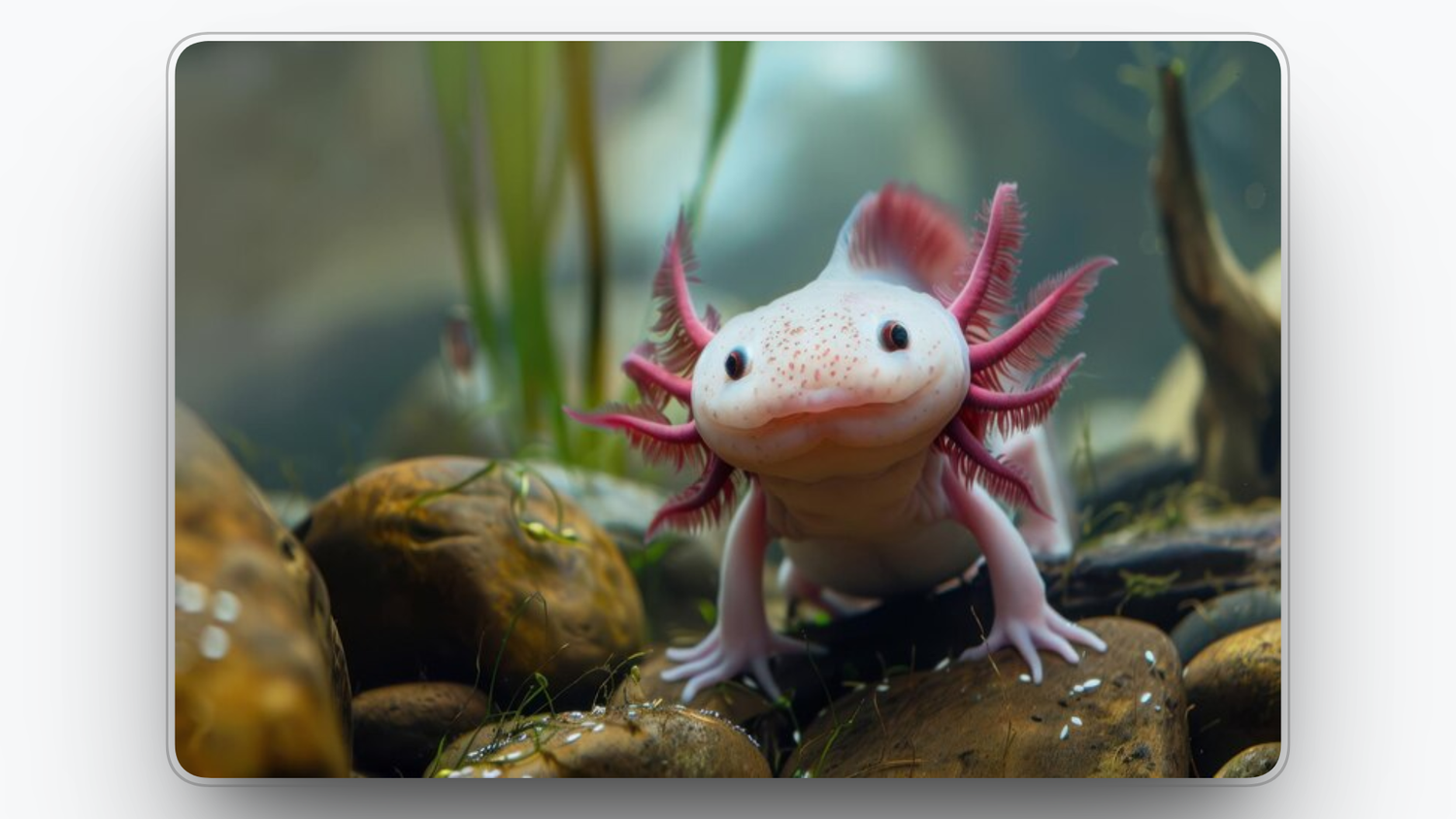
Most axolotl health cases link back to food and water. When diet does not fit the species, you see slow growth, weak body, stress, float and gut block. So an axolotl diet sits at the core of axolotl care and long life.
New axolotl owners often face doubt at each feed. Worms or pellets? Live food or frozen food? How often to feed a hatchling, a young axolotl, or an adult? Give too much and you risk waste and gut load. Give too little or the wrong food and you risk slow growth and low energy.
This guide gives you an axolotl diet checklist. You will see what to feed at each stage, how often to feed, how much to give and what to avoid. You can use it as a daily axolotl food plan for age, size and tank needs.
Axolotl Diet Basics And What They Eat
Axolotls hunt meat food in water. They grab worms, insect larvae, shrimp, and fish fry near the bottom. In a tank, the goal is the same. Use worm food and other meat food that acts like prey in water and sits near the bottom.
| Point | Wild Axolotl | Captive Axolotl Goal |
|---|---|---|
| Main Food Types | Worms, insect larvae, small shrimp, small fish | Use worm food and other small meat food that match this pattern |
| Food Style | Live prey that move in the water or on the bottom | Offer food that moves or is easy to see and grab |
| Food Place | Food near the bottom, in plants, under rocks | Give food near the bottom, near hide spots and rest spots |
| Diet Type | Full meat diet from small water animals | Keep diet as full meat diet, not plant based |
Core Diet Rules
- Use meat food as the base of the diet
- Avoid plant food as the main part of the diet
- Keep each food piece small enough to fit in one gulp
- Cut worms and other food so no piece is wider than the mouth
- Feed in small parts, not one big pile
- Stop feeding when the belly lifts a bit and eating slows
- Remove all left food after each feed
- Remember that left food breaks down and adds waste to water
- Keep a steady plan for water tests and water changes to match the feed load
Axolotl Diet By Age And Size
Axolotl diet changes as body length and age change. Use this section to match food, feed times, and portions to the stage your axolotl is in right now.
Hatchling Diet Checklist
- Use food such as baby brine shrimp, daphnia, microworms
- Offer food in short feed windows across the day
- Aim for 3–5 feed times per day
- Keep food close to rest spots in the tank
- Remove food that stays in water after each feed
- Change water on a set plan to control waste
Young Axolotl Diet Checklist
- This stage starts when front legs show and length reaches around 7–8 cm
- Use food such as baby brine shrimp, daphnia, chopped worm pieces
- Start with more live moving food, then bring in still food step by step
- Feed 2–3 times per day
- Watch body line and stop feed when belly lifts and grab rate slows
- Remove left food and keep water checks on a set plan
Juvenile Axolotl Diet Checklist
- This stage runs from length around 7–8 cm up to around 15 cm
- Use mix of earthworm pieces, blackworms, bloodworms, axolotl pellets
- Swap one feed at a time from live food to pellets
- Feed 1–2 times per day
- Keep each food piece under mouth width
- Remove left food and track growth once per week
Adult Axolotl Diet Checklist
- This stage starts from length around 15 cm and up
- Use staple food such as full earthworms, nightcrawlers, axolotl pellets
- Use treat food such as bloodworms, shrimp, fish fry from safe source
- Feed 2–4 times per week, not every day
- Keep gap days between feed days for gut rest
- Remove left food and log weight or photo once per month
Axolotl With Low Movement Or In Late Life Diet Checklist
For axolotls with low movement or those in late life, cut the feed plan down to 1–3 feeds per week and use worms and pellets in lower counts per feed. Check the body line often for loss or gain and change portion size if the spine line starts to show or the belly hangs down. Keep water checks on a set plan, as waste load can be harder to handle in this stage and good water quality helps the body use the food more safely.
Axolotl Food Type Checklist

Here is the list of each axolotl food group. Use it to plan feeds, buy food, and pick a staple and a treat set.
Worm Food
Worm food supports the axolotl diet and fits how axolotls feed in water. Use earthworms and nightcrawlers for regular feeds and cut each worm so pieces match the axolotl mouth. Rinse worms in tank water before feeding and keep worm tubs in steady care so the supply stays ready.
If you want a step-by-step deep dive on worm types, storage, and feeding technique, you can also read Fantaxies’ guide, How to Feed Your Axolotls Worms: All You Need to Know, alongside this checklist.
Pellet Food
Pellet food helps keep feeds steady across the week. Pick sinking pellets for axolotls or for meat eating fish and check that meat stands first in the part list on the pack. Bring pellets in with worm feeds and then raise pellet use step by step while you watch body shape and stool.
Live Food
Live food adds hunt work and helps young axolotls find food. Use live worms for full feeds and use live brine shrimp or daphnia when axolotls still take tiny prey. Give live food in short feed windows and take out any prey that stays in the tank after the feed.
Frozen & Freeze Dried Food
Frozen food and freeze dried food can support worm and pellet feeds when you need quick options. Use frozen bloodworms, mysis shrimp, and similar water prey that fit in one bite. Thaw frozen food in tank water in a cup and soak freeze dried food so it sinks and does not swell inside the gut.
Other Food Options
Extra prey types can sit at the edge of the plan. Use only insect forms that an axolotl can bite through and swallow without shell trouble and never use bugs from yards, roads, or spray zones. Keep these feeds as add-ons while worm and pellet food stay in the lead place.
Supplements
Supplements only come in when diet and vet advice call for them. Build the plan on worms and pellets first, then ask a vet before you add any vitamin or mineral product. After you start a supplement, watch stool, skin, and gills and tell the vet if you see change.
Foods And Items To Avoid
This part lists food and tank items that do not fit in an axolotl diet plan. Keep this in mind when you pick food or set up the tank.
Unsafe Food List
Skip meat from land animals such as beef, pork, and chicken. Skip dog food, cat food, and food made for people with salt, spice, oil, or sugar. Do not use feeder fish from mixed shop tanks, and do not drop bugs from yards, roads, or spray zones into the tank. These feeds can bring disease, gut strain, or wrong nutrient load for an axolotl.
Plant Food
Axolotls use meat food and do not use plant food as a fuel source. Do not feed fruit, bread, grain, or leaves. Plants in the tank stay as cover and rest areas, not as food in the diet plan.
Substrate And Object Risk
Any loose item that fits in the axolotl mouth can end up in the gut. Skip gravel and stones that sit within mouth size and use tank bases that do not break into bite pieces. Check decor for loose parts, sharp edges, and small bits and keep those parts out of the tank so the axolotl does not grab and swallow them during feed.
Feeding Schedule And Portion Checklist

Feed plan links to age, size, and food type. Use this guide to set how often to feed and how much to give at each feed.
Feeding Frequency By Stage
| Stage | Rough Length | How Often to Feed |
|---|---|---|
| Hatchling | Up to 3–4 cm | 3–5 times per day |
| Young | Around 4–8 cm | 2–3 times per day |
| Juvenile | Around 8–15 cm | 1–2 times per day |
| Adult | From around 15 cm | 2–4 feeds per week |
| Low movement or old | Adult body, slow use | 1–3 feeds per week |
Portion Control
Portion control keeps gut load and waste in check. Watch the axolotl body during and after each feed.
- Offer food in parts, not all at once
- Watch the belly while you feed
- Stop feed when belly lifts and looks full but not round and tight
- Do not add more food once the axolotl slows down or turns away
- Use a set time limit for each feed, for example 5–10 minutes
- Remove all food that stays in the tank after the time limit
Fasting
Gap days help the gut clear in some stages. Use them with care and never as a fix for strong weight gain or health issues.
- Use gap days for adult axolotls that eat well and hold weight
- Place at least one gap day between big feeds with worm or pellet food
- Do not use gap days for hatchlings
- Do not use gap days for thin axolotls or axolotls that just came from rescue
- Do not use gap days for sick axolotls without vet advice
- If an axolotl skips food on its own for more than a few planned feeds, call a vet
Health And Body Check Linked To Diet
Diet shows in body shape, growth, and waste. Use this to link feed plans to simple body checks.
Signs Diet Works
- Size goes up over weeks for young axolotls
- Length holds steady for adult axolotls
- Body line shows smooth curve from head to tail
- Ribs and spine do not stand out
- Axolotl shows interest in food at each planned feed
- Stool comes out in formed pieces
- Stool comes out on a regular pattern for that age
Signs Diet Has Problems
- Spine and ribs start to show
- Head looks wide while body stays narrow
- Axolotl loses length or bulk over time
- Belly hangs under body or spreads out to the sides
- Axolotl floats often after feeds
- Axolotl spits food out again and again
- Long gaps come with no stool in the tank
When To Call A Vet
- Axolotl stops eating for more than a few planned feeds
- Weight or body bulk drops over short time
- Swell shows in gut or limbs
- Red marks, sores, or white growth show on skin or gills
- Stool shows blood or clear slime
- Axolotl stays at the top, gasps, or rolls on side and does not set itself right
If you want to link this food plan to tank setup, water care, and other basics, you can read our beginner axolotl setup and care guide.
Special Diet Cases
Some axolotls do not match the normal feed plan. Use this part when the feed pattern or body state is outside the usual guide.
Picky Eater
Start each feed with worm pieces that your axolotl already takes. Offer a few pellets right after worm feed, in the same spot in the tank. Dip pellets in worm juice so smell and taste stay close to worm food. Keep feed times the same each day so the axolotl links place, time, and food.
Rescue or Thin Axolotl
Use more feeds with low feed size across the day instead of one big feed. Make worm food the base until the body line looks better and ribs and spine fade from view. Add pellets only after the axolotl takes worm food without pause. Keep water care tight so the body can use the food well.
Breeding Pair and Female After Eggs
Before breeding work, feed worms and pellets on more days and watch body weight on both axolotls. After egg lay, give the female feeds with worm food in low feed size but higher feed count, then move back to the normal plan as body weight comes back. Call a vet if food refusal or weight loss does not slow.
Sick Axolotl
Follow vet steps first. Offer short feeds with worm pieces or known pellets and stop if the axolotl turns away. Do not bring in new food types during a health issue. Keep water cool and clean as the vet sets, and call again if feed skip or swell grows worse.
If you are planning meals for a new or future pet and want a healthy start, you can browse healthy captive-bred axolotls and more care guides from Axolotl Planet to support your plans.
FAQs
Q1. What should I feed my axolotl each week?
Feed worms and meat based sinking pellets through the week. Use worms as the base food and pellets in some feeds. Add bloodworms, brine shrimp, or daphnia in a few feeds as extra.
Q2. Are pellets ok for axolotls?
Yes, pellets can work for axolotls. Use soft sinking pellets made for axolotls or other meat eating fish or amphibians. Start with a mix of worms and pellets, then raise pellet use step by step.
Q3. How often should I feed my adult axolotl?
Feed an adult axolotl every two or three days. Offer food it can finish in a few minutes, then remove what stays in the tank. Watch body shape and stool to see if this pace fits.
Q4. How often should I feed a young axolotl?
Feed young axolotls once or twice per day. Use small meals instead of one big feed and watch growth each week. When growth slows and length goes up, you can start to drop feed count.
Q5. Can axolotls eat fish flakes?
Fish flakes do not match axolotl needs. They break up fast, cloud water, and do not give the same meat load as worms or pellets. It is better to skip flakes and use worms and pellets.
Q6. Can I use feeder fish for my axolotl?
Feeder fish can bring in parasites or other diseases. They also do not match the diet plan as well as worms and pellets. Most keepers avoid feeder fish and use worm food instead.
Q7. What size should axolotl food be?
Each food piece should fit in the axolotl mouth in one gulp. Cut worms and other food so no part is wider than the mouth. This lowers the risk of choke and gut block.
Q8. What foods should I never give an axolotl?
Do not give beef, chicken, or other land meat. Do not give dog or cat food, or food with spice, salt, or oil. Skip random table scraps and stick to worm food, pellets, and water prey.
Q9. How long can an axolotl go without food?
A strong adult axolotl can miss feeds for some days and still cope. If it skips food for more than a few planned feeds in a row, treat that as a warning sign and call a vet.
Q10. How do I know if I am overfeeding my axolotl?
If the belly stays wide long after feeding, you may feed too much. Loose stool, more waste in water, or floating after meals are also signs. In that case, cut feed size and feed count and review the plan.

Leave a comment
This site is protected by hCaptcha and the hCaptcha Privacy Policy and Terms of Service apply.