

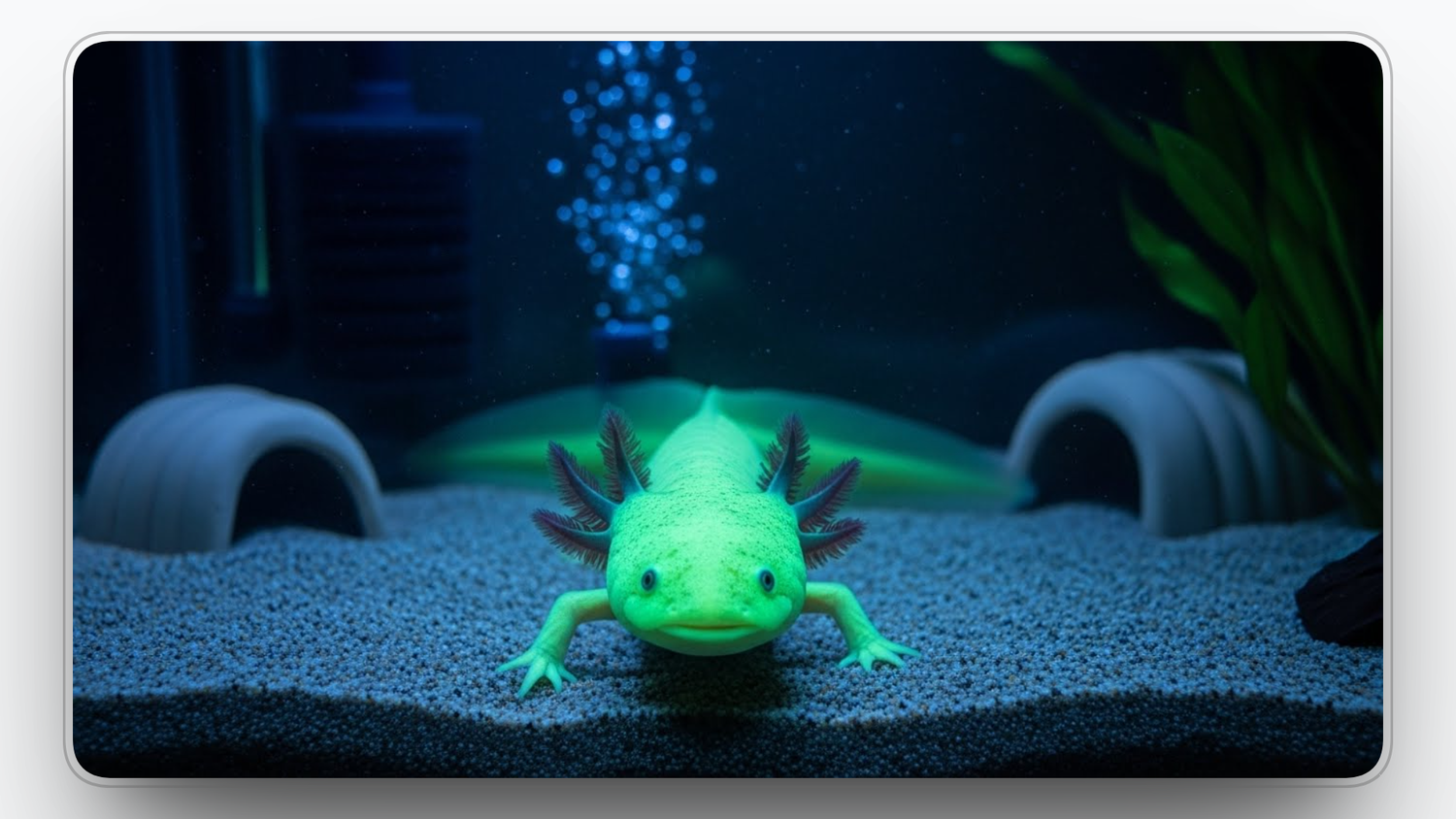
GFP axolotl are axolotl with the green fluorescent protein gene. Under UV or blue light they glow green, so keepers also call them glow axolotl. In a tank they reach 20–30 cm and can live 10–15 years with water at 16–18°C and zero ammonia and nitrite as part of GFP axolotl care.
People worry about this gene, UV light, health, local rules, and cost for a full setup and ongoing care. They want facts before they pick a GFP axolotl pet.
This guide is for hobbyists, first time axolotl owners, and fish keepers who want clear facts on GFP axolotl care, glow axolotl, and choosing a GFP axolotl pet.
Origins And Genetics
GFP axolotl came from lab work. Scientists took the green fluorescent protein gene from a jellyfish and placed it into axolotl lines for study. This gene makes cells glow under UV or blue light, so it became useful for work on limb regrow, organ growth, and cancer study. Over time, some of these lines moved from labs to the pet trade as GFP axolotl pet options.
The GFP gene acts as a dominant trait. If a GFP axolotl breeds with a non-GFP axolotl, part of the young can carry the gene and glow. Some axolotl can carry the gene without strong glow in every part of the body, while others show strong glow in skin, tail, and eyes. The gene does not change core GFP axolotl care, but it does matter for breeding plans and long term line health.
How GFP Axolotl Look And Glow
GFP axolotl looks like other axolotl in normal light. The glow shows only when you use UV or blue light, so it links to setup, not daily GFP axolotl care.
Look In Normal Light
- Body look depends on morph. A GFP leucistic, wild type, or albino still shows the same pattern as that morph.
- Small signs can show in skin or eyes. Some glow axolotl show a slight green tone, more clear in light morphs.
- You cannot confirm a GFP axolotl pet by normal light only. You still need a UV or blue light check.
Glow Under UV Or Blue Light
- Glow needs UV or blue light in a dark room. Room light alone does not show the GFP effect.
- Head, gills, belly, and eyes often show more glow because skin in these areas blocks less light.
- Light morphs can show more even glow. Dark morphs can show more “x-ray” style glow in bones and eyes.
Safe Use Of Light
- Use UV or blue light for glow in short sessions, then go back to dim or no light. Do not use it as the main tank light for GFP axolotl care.
- Place the light above the tank so the axolotl can move into shade. Avoid a narrow beam straight in the face.
- Stop the light if you see stress signs: rush to a hide, fast swim along glass, tight tail, or loss of interest in food after a glow session.
Are GFP Axolotl Right For Hobbyists

This helps you see if a GFP axolotl pet fits your tank, time, and budget. Use it as a quick check before you look for a glow axolotl for sale.
Why People Pick GFP Axolotl
Many people choose a GFP axolotl because they want a pet that feels calm most of the time but has a unique “wow” factor when friends or family visit. The green glow under UV or blue light makes them stand out, yet their basic care is the same as any other axolotl: cool water, low light, and a quiet tank. They also work well in school or display tanks, where short glow sessions can be used to talk about genes, science, and how the GFP trait works in real life.
Things To Think About Before You Buy
Before you bring home a glow axolotl, think through the whole setup, not just the animal. You need room for an adult tank and stand, plus gear like a filter, test kit, cooling option, hides, and a steady source of good food. Add in the startup cost and the monthly cost for power, food, and water care, along with the time you can give each week for testing and water changes. It is also worth asking how you personally feel about keeping a gene-edited pet and whether that fits your own comfort level and values.
Law And Rules Check
Rules for axolotls and glow axolotls can change from country to country and even between states or cities, so you should always check before you buy. Many people search “are GFP axolotls legal in the USA” or “can you own GFP axolotls in [state]” because the answer is not the same everywhere. Look up your local pet, wildlife, and import rules in advance so you know you can keep your GFP axolotl legally for its full life.
Care Guide For GFP Axolotl
GFP changes glow, not care needs. GFP axolotl care is the same as for any other axolotl or glow axolotl pet.
Tank Size And Setup
- Plan one axolotl for one tank of about 75–100 liters.
- Add more space if you keep more than one GFP axolotl pet.
- Use bare bottom or fine sand. Do not use gravel that fits in the mouth.
- Give hides: caves, tubes, or PVC pieces so the axolotl can rest.
- Use a filter with gentle flow. Aim flow at a wall, not at the axolotl.
- Keep a lid on the tank so the axolotl cannot jump out.
Water Numbers
- Temp: about 16–18°C for good GFP axolotl care.
- pH: around 7.0–8.0 and stable.
- Ammonia: 0 ppm.
- Nitrite: 0 ppm.
- Nitrate: under 40 ppm, lower is better.
- Cycle the tank before you add a glow axolotl.
- Use a test kit each week for ammonia, nitrite, nitrate.
- Treat tap water with a dechlorinator before you add it.
Light And Day Cycle
- Room light or low tank light is enough for a GFP axolotl pet.
- Do not use strong white light all day.
- Give a simple day and night cycle so the axolotl can rest.
- For glow time, use UV or blue light for a few minutes only, then turn it off.
Food And Feeding Plan
GFP axolotls are carnivores and do best on a simple, steady diet of earthworms, good axolotl pellets, and small foods like bloodworms or brine shrimp blocks. Young axolotls need to eat once or twice a day, while adults usually do well with a meal every one to two days, depending on how their body looks. After feeding, remove any uneaten food so it does not rot in the tank, and adjust portions if the belly hangs too wide or the body looks thin with a large-looking head.
Handling And Stress
Avoid handling your GFP axolotl out of water because its skin dries quickly and land time is stressful. When you have to move the animal, use a tub or container filled with tank water instead of a net so the gills and skin stay protected. Watch for stress signs such as fast gill movement, curled gill tips or tail tip, loss of interest in food, or frantic swimming, and always check your water numbers first if you notice these changes.
Tank Mates And Group Setup
- The best plan is to keep one axolotl in one tank.
- Fish can nip gills or eyes and can carry disease.
- Axolotl can eat fish, shrimp, or snails and can choke.
- If you keep more than one glow axolotl, give big space, many hides, and check for bites on limbs and tail.
Health, Lifespan, And Problems

This part links GFP axolotl care with lifespan and risk. Use it as a quick check for what can go wrong with a glow axolotl in a home tank.
Normal Lifespan In Home Tanks
A GFP axolotl can live around 10–15 years when kept in a stable, well-maintained tank. Steady temperature, safe water numbers, and a simple, consistent feeding plan all help them reach the upper end of this range. Sudden swings in temperature or water quality can add stress and shorten their lifespan, so slow, careful changes are always best.
Common Health Issues
- Fungus: white fluff on gills, toes, or tail can point to fungus. Often linked to stress, poor water, or low temp control.
- Heat stress: temp above range can cause fast gill move, float, loss of food, and curled tail tip.
- Impaction: gravel, stones, or big food can block the gut. Signs include no poop, float, and no food.
- Bad water issues: ammonia or nitrite above zero, or nitrate too high, can cause gill curl, skin damage, float, and low energy.
Does GFP Change Health
- Current reports from keepers say GFP does not add extra risk on its own.
- Health still depends on GFP axolotl care like its water, temp, food, and stress.
- Real risk comes from poor tank setup, bad water, overfeeding, heat, and rough handling, not from the glow trait.
Buying A GFP Axolotl?
This will help you check if you are ready, then shows how Axolotl Planet fits in as a source for a GFP axolotl pet.
Quick Checks Before You Buy
- Is your tank fully cycled with safe water numbers?
- Do you have a cool room or a way to keep water in range all year?
- Do you have space for at least one adult axolotl tank?
- Can you cover food, power, and basic vet bills each month?
- Are you clear on local rules for axolotl and glow axolotl?
- If you plan to breed later, do you have space for many babies, not just one pair?
Why Buy From Axolotl Planet
- Focus on axolotl and GFP axolotl only, not mixed stock.
- Clear product pages that show morph, GFP status, size, and price for each glow axolotl.
- Photo of the exact axolotl in many named listings, so you know what you get.
- Guides and how-to posts on setup, cycling, and care linked from the store.
Price And Cost
On Axolotl Planet USA, current GFP axolotl prices start around $159.99 and go up to about $304.99+ for special or named animals, depending on morph and size.
If you want to compare different sellers and buying options before you choose a glow axolotl, you can read our guide on where to buy an axolotl from trusted places.
If your GFP axolotl ever does get sick, it helps to know which treatments are safe before you reach for random fish medications. You can use this external guide from Fantaxies, 28 Axolotl Safe Medications & Treatments: The Complete List, as a reference when you are working with your vet or choosing products. It focuses on axolotl-safe ingredients and gives you a clearer idea of what is likely to help rather than harm your glow axolotl.
FAQs
Q1. What is a GFP axolotl?
A GFP axolotl is a normal axolotl that carries the green fluorescent protein (GFP) gene. This gene makes the body glow green under UV or blue light, so many people call it a glow axolotl.
Q2. Do GFP axolotls glow all the time?
No, they do not glow in normal room light. The glow shows only when you use UV or blue light in a dark or low light tank.
Q3. Do GFP axolotls need UV light to live?
No, they do not need UV light for health or growth. UV or blue light is only for short viewing sessions when you want to see the glow effect.
Q4. Is GFP axolotl care different from other axolotl?
Care is the same as for any axolotl: cool, clean water in a cycled tank, low flow filter, and meat-based food. You do not need extra or special care steps just because they glow.
Q5. Are GFP axolotl healthy?
GFP axolotl stays healthy when water numbers, temperature, and diet are kept in the right range. The GFP gene itself is not known to cause health problems in normal home care.
Q6. How long do GFP axolotl live?
With good care, most GFP axolotl can live around 10–15 years. This is the same lifespan range often given for other pet axolotl.
Q7. What tank size do I need for a GFP axolotl?
Plan at least a 75–80 liter (20 gallon) tank for one adult GFP axolotl so it can move and rest with ease. Bigger tanks give more stable water and make GFP axolotl care easier.
Q8. Can GFP axolotl live with fish or other tank mates?
It is best to keep them alone in a species-only tank. Fish can bite gills or eyes, and axolotl may eat or choke on fish, shrimp, or snails.
Q9. Is the glow and UV light safe for them?
Short, rare UV or blue light sessions are fine for most GFP axolotl. Long or strong lighting can stress eyes and skin, so keep glow time brief and always give them dark, calm time after.
Q10. Does the GFP gene pass to babies?
Yes, the GFP gene can pass to young when at least one parent has it. How many babies glow depends on the genes of both parents, so breeders often track their lines and pairings.

Leave a comment
This site is protected by hCaptcha and the hCaptcha Privacy Policy and Terms of Service apply.