


One axolotl pair can lay 100 to 1,000 eggs in one spawn and can live 10 to 15 years in a tank. Only part of those eggs reach adult size, so each step in the axolotl life cycle matters for care and planning.
Owners and breeders face issues at each step. Eggs can fail, larvae may not grow, young can bite each other, adults can lose health. If food, water care or space do not match the stage, the life cycle can break and many can die.
This guide explains the axolotl life cycle from spawn to salamander and links each stage to care steps. You can use it to plan breeding, tank space, food and water care and to lower risk and loss.
What is an axolotl?
An axolotl is a salamander that lives in water from birth to adult life. It belongs to the Ambystoma group and comes from lakes and canals in Mexico, mainly the Xochimilco area. Many people keep axolotls in home tanks, and many labs use them in study work on growth and limb repair.
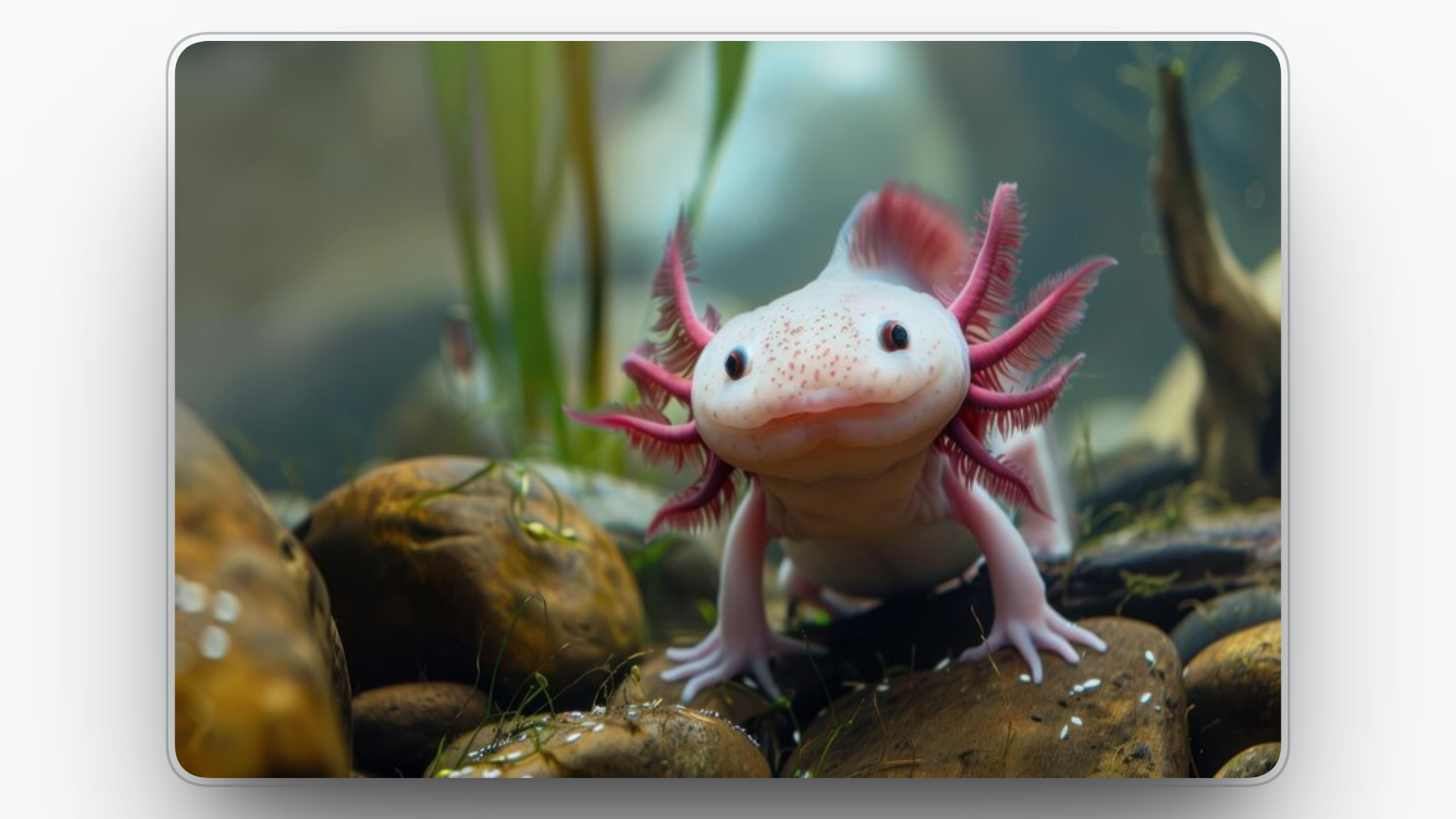
An axolotl has four legs, a tail, a head with a wide mouth and feathery gills on each side. The gills take oxygen from the water, and the tail helps with short bursts of swim. Axolotls show neoteny, which means they keep larva traits and gills even when they can breed. So they reach adult size and can lay eggs while they still look and live like a water larva.
Stages in the Axolotl Life Cycle
The axolotl life cycle has five main stages. It starts with eggs, then moves through hatching and early larva, growing larva, juvenile, and finally adult. In a few cases an adult can change into a land salamander form, but this is not common and most axolotls never leave the water. The main stages in order are egg, hatching and early larva, growing larva, juvenile axolotl, and adult axolotl. Most axolotls stay in water for their whole life, reaching adult size and breeding while keeping their gills and full aquatic form. Only a small share ever changes into a land salamander form.
Stage 1 – Eggs

The axolotl life cycle starts with eggs in water. In this stage the female lays eggs, the embryo forms and the keeper works to guard them until they hatch.
Breeding And Egg Laying
Breeding starts when a male and a female share one tank and water values match axolotl needs. The male drops cone shaped packets on the tank floor. The female moves over them, takes them in and then lays eggs on plants, rocks or other tank parts in water or in the wild. One spawn can hold from 100 to 1,000 eggs.
Egg Look And Growth
Each egg sits in a jelly coat that holds it in water. At first the center is a round cell. Over days this cell bends and turns into an embryo with head and tail. Near the end of this stage the embryo moves inside the coat and gets ready to hatch.
Egg Care Steps
- Keep eggs away from adults in a tub or move adults out of the tank
- Keep water in the right range for axolotls with low flow
- Check eggs each day and remove eggs that turn white or grow fungus
- Decide how many eggs you can raise and end the rest before they hatch if needed
Stage 2 – Hatching And Early Larva

Eggs open and larva move into open water. In this stage the young axolotl leaves the egg and starts to live and feed on its own.
When Eggs Hatch And How A Hatchling Looks
Eggs open over a span of days. Some hatch sooner and some later even in one spawn. When the coat breaks, a larva comes out and rests on the floor or on plants. You can see head, tail and side gills that hold thin stalks.
Parts Of A New Larva
A new larva has a head, a long tail and three pairs of gills on the sides of the head. The body still holds a yolk store from the egg. This store gives energy for a short time after hatch. Once the yolk store goes down, the larva must take live food from the water.
Early Feeding And Tank Setup
- Start live food when larva begin to swim and snap at moving specks in the water
- Use moving food such as baby brine shrimp and daphnia that fit in the mouth
- Feed in short gaps through the day and clear left food and waste after each feed
- Keep larva in tubs or low water in a tank with gentle air and easy access for cleaning
- Split groups by size and keep water fresh to lower loss and help more larva reach the next stage
Stage 3 – Growing Larva

Larva leaves the first feed phase and enters steady growth. In this stage legs form, body mass builds and groups start to need more room.
Growth Signs And Body Changes
Front legs show first, then back legs. Toes separate and gain shape. The head and body grow wider, and the tail holds more power for short swims. Gills stay on the side of the head and still handle all gas exchange.
Food Step Up And Feeding Plan
- Move from tiny live food to larger prey such as bigger brine shrimp, daphnia and chopped worm
- Add soft pellets once larva grab and swallow food from the floor
- Feed in small rounds through the day and watch bellies and waste after each round
- Remove left food and waste after feeds and match food size to mouth size
Bites, Regrowth And Group Control
As growth speed changes, some larva outgrow others and start to bite tails, gills and legs. Axolotl tissue can regrow, but bites still cause stress and loss. Sort larva into groups by size and give space between groups. This lowers bite risk and keeps growth more even across the spawn.
Water Change Plan And Tank Layout
Many growing larva in one tank create waste. Use tubs or tanks with easy access for water change work. Swap part of the water on a set plan and match new water to the same range for axolotls. Keep simple hides and smooth bases so food, waste and weak larva stay easy to spot and move.
Stage 4 – Juvenile Axolotl

The juvenile stage starts when limb growth and body length pass the early larva phase. In this stage the axolotl builds more mass, shifts food type and moves into a long term tank.
When An Axolotl Counts As Juvenile
An axolotl counts as juvenile when legs hold full toes and the body reaches a length that needs a main tank, not a small tub. Age often sits in the range of a few months after hatch, but growth rate can shift with food and water care.
Body In The Juvenile Stage
The head gains more width, the body gains more depth and the tail holds more power for short bursts of swim. Gills still handle gas exchange and stay on each side of the head. The whole form now looks close to an adult, only with less total length.
Tank Move And Setup For Juveniles
Juveniles move from rearing tubs into a main tank. The tank needs enough base space for full stretch of the body and room to turn. A simple layout with hides, smooth base and low flow helps the animal rest, feed and move without stress or injury.
Food And Feeding Plan For Juveniles
- Offer earthworms in pieces, sinking pellets and safe frozen items such as bloodworm blocks
- Match food size to mouth size and watch the belly line after each feed
- Feed on a set plan and skip feeds when the body holds clear extra mass
- Remove left food and waste after each feed to keep water in good shape
Sex Signs In Juveniles
First sex signs start to show in this stage. Males form a more raised area at the base of the tail, females hold more mass in the body when they are near full growth. Sexing stays hard at this point because many juveniles have not yet built full adult form. A clear sex ID often needs more time in the next stage.
Stage 5 – Adult Axolotl

The adult stage is the long stage in the axolotl life cycle. In this stage the axolotl holds full form, can breed and needs a stable tank plan for many years.
Adult Size And Body Form
Many adult axolotls reach a length in the range of 18 to 25 centimeters in tanks. Some grow more with strong food supply and good water care. Head, body, tail and limbs are all fully formed and the gills stay on each side of the head.
Lifespan Of Axolotls
In tanks, axolotls often live 10 to 15 years with correct care. A few live even longer. This long span means each adult needs a long term tank and care plan.
Tank Size And Stock Level
Each adult needs enough floor space to stretch, turn and move. One adult fits best in a tank with a long base rather than a tall shape. Extra adults need more space, so stock level should stay low. Crowded tanks raise stress and waste.
Water Range And Test Rules
Adult axolotls need cool, stable water. Ammonia and nitrite should stay at zero and nitrate should stay in a low range with water change work. Regular tests for these values and for pH help keep the tank inside a safe range for gills and skin.
Tank Mates For Adults
Most fish nip gills or fins or cannot live in the cool range that suits axolotls. Many keepers keep adults in species-only tanks. Any tank mate plan carries risk and needs close watch and fast removal if bites or stress appear.
Adult Food List And Feeding Plan
- Main foods such as earthworms and sinking axolotl pellets
- Extra foods such as bloodworm blocks and small pieces of prawn or fish
- Feed young adults more often and older adults less often
- Skip feeds when the belly line looks round or heavy
Avoiding Overfeeding And Weight Gain
Overfeeding leads to fat build up and health loss. Watch the outline of the body and base of the tail and cut feed amounts when you see clear fat pads. Keep a fixed feed plan and avoid treats between feeds.
Adult Breeding Cycle And Rest Time
Adults can breed in tanks once they reach full size and health. In the wild many breed in cooler months with shifts in light and food. In tanks, breeders often trigger breeding with a drop in temperature. A female needs long rest gaps between clutches so the body can rebuild. Many keepers limit breeding to once per year or even less to protect long term health.
Metamorphosis to Land Salamander Form
Metamorphosis means an axolotl drops its gills, uses lungs more and shifts from full water life to land life. This path is rare and most axolotls stay in water for their whole life cycle.
Stress, heat, low water level or hormone use can push this change and many axolotls die during or after it. Because of this, keepers avoid forcing metamorphosis and give any animal that does change a land setup with damp ground, hides, a water dish and land prey such as worms and insects.
Life Cycle in the Wild vs Life Cycle in a Tank
| Point | Wild Life Cycle | Tank Life Cycle |
|---|---|---|
| Habitat | Lakes and canals in Mexico with plants, mud and flowing water | Glass tank with filter, hides and water care by the keeper |
| Water Change | Set by rain, season and inflow | Set by water changes, filter work and test work |
| Food | Worms, insect larvae, small fish and other small prey found while hunting | Worms, pellets and frozen foods given by the keeper |
| Breeding Time | Often linked to cool season and changes in water and light | Can happen at many times when the keeper sets light and temperature |
| Egg Safety | Eggs face fish, birds and water change and many do not reach hatch | Eggs can be kept in tubs with no adults and steady water |
| Larva Risk | Larva face prey loss, poor food and many wild threats | Larva face bites from tank mates and risks from poor food or water care |
| Growth Speed | Growth depends on season and food supply | Growth depends on feed plan and how clean and cool the water stays |
| Adult Life | Adults face loss from predators, disease and loss of habitat | Adults live with less outside threat but depend on good care for many years |
| Metamorphosis Chance | Can happen when water or land change pushes the animal | Can happen if water care is poor or if keepers try to force change |
| Role in the Life Cycle | Part of a wild group that links to the whole lake system | Part of a tank group in homes, shops or labs, often linked to breeding plans |
If you plan to raise eggs all the way through to sale-size juveniles, it also helps to see a full step-by-step example from a long-time breeder. You can use this external guide from Fantaxies, How to Raise Axolotl Eggs to Juveniles in 5 Stages, as a walk-through of each stage from fresh spawn to young axolotls ready for new homes. Read it alongside this life cycle overview to plan space, food and time for each batch.
Care Checklist by Stage
Axolotls need different care at each step of the life cycle. Use this list when you check tanks and plan feeds.
Egg Stage Checklist
- Keep eggs in cool clean water with low flow
- Move eggs away from adults and remove bad or white eggs
Larva Stage Checklist
- Feed small live food that moves in water and fits in the mouth
- Keep water shallow, clean and split groups by size to lower bites
Juvenile Stage Checklist
- Move to a larger tank with hides and low flow
- Feed worms and pellets, watch growth and body shape
Adult Stage Checklist
- Give each adult enough tank space and stable cool water
- Feed a set mix of worms and pellets and avoid overfeeding
Understanding each stage in the axolotl life cycle helps you plan tank space, food and water care in advance, so more eggs make it safely to healthy, long-lived adults.
If learning how axolotls grow has you ready to start with your own, you can browse healthy captive-bred axolotls for sale on Axolotl Planet.
FAQs
How long from egg to a young axolotl that can be sold?
Axolotl eggs usually hatch in about 10 to 14 days. With good food and water care many juveniles reach a common sale size in roughly three to six months.
How many eggs from one spawn reach adult size?
One female can lay 100 to over 1,000 eggs in a clutch, sometimes more, but only a small share will be raised to adult size and many are culled or lost on the way.
Can eggs stay in the tank with adult axolotls?
It is not safe to leave eggs with adults because adults often eat them or damage them while moving around the tank. Most guides suggest moving eggs or adults to a separate setup.
Can larvae stay together in one tub?
Larvae can stay together but there is a high risk of biting and cannibalism, especially when sizes differ. Keepers often sort by size and keep numbers low in each tub to cut this risk.
Will every axolotl turn into a land salamander?
No, axolotls are neotenic and most stay in an aquatic form for life even when fully grown and breeding. Metamorphosis into a land salamander is rare and usually linked to strong stress or hormone triggers.
Can a land form axolotl go back to full water form?
Once an axolotl has completed metamorphosis it behaves as a land salamander and does not grow gills back or return to a full aquatic life. Care guides note that this form usually has a shorter life span and needs a land style setup.
At what age can axolotls start to breed?
Some sources report sexual maturity from about six months, but many breeding guides suggest waiting until around ten to eighteen months and a good body size for safer breeding.
How often can axolotls breed in one year?
Healthy axolotls can breed more than once per year and some guides mention two or three clutches with good rest and food. Many keepers limit this and give several months of recovery to protect the female.

Leave a comment
This site is protected by hCaptcha and the hCaptcha Privacy Policy and Terms of Service apply.