

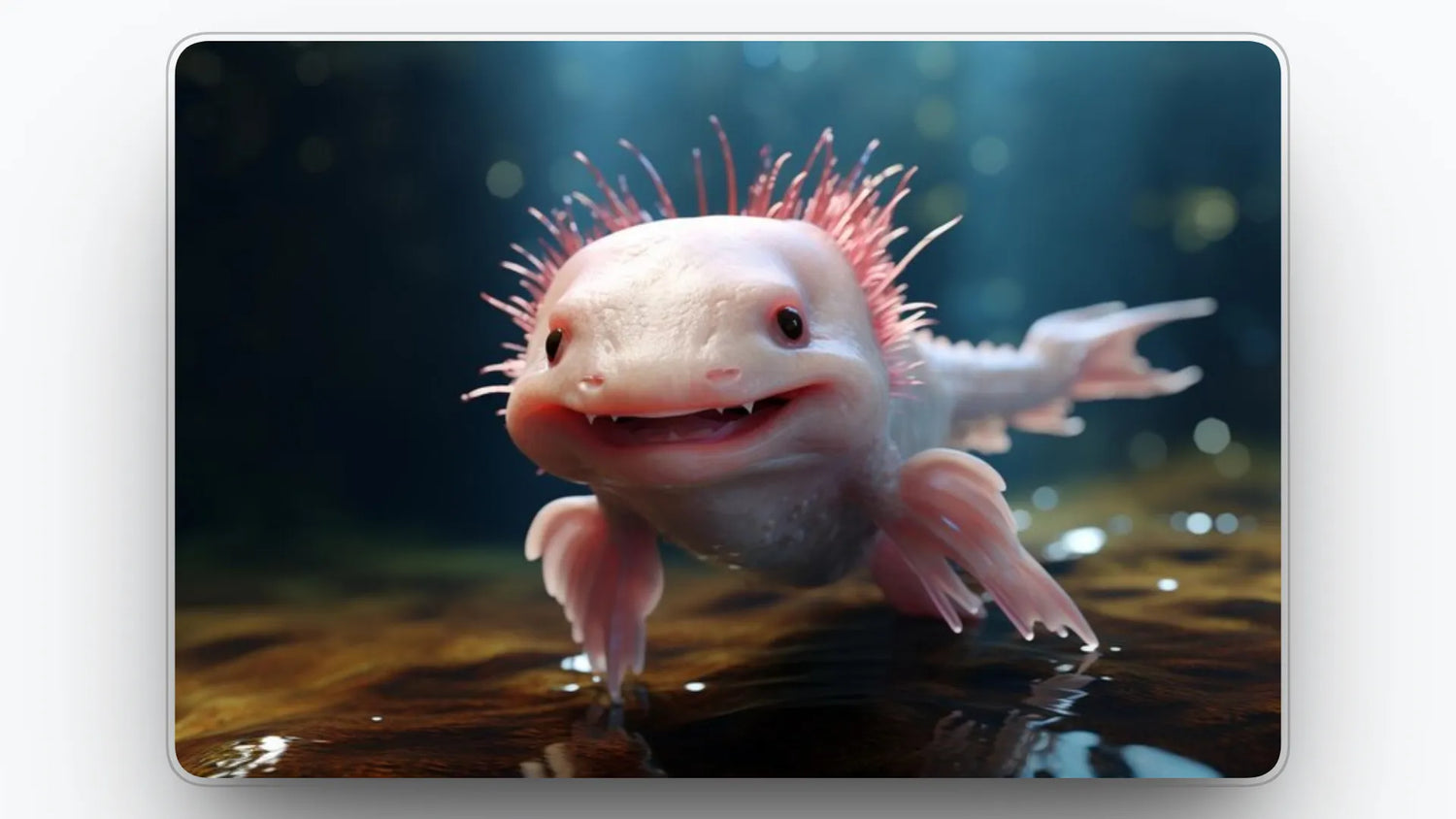
Axolotl teeth are real, but they are very small and mostly made to grip food, not chew it. They sit along the jaw and on the roof of the mouth, so you usually will not see them unless your axolotl opens wide. Their job is simple: hold food in place long enough to swallow.
This topic matters because it connects to common owner worries. People ask if an axolotl can bite a finger and what it feels like. They also worry when they cannot see any teeth, or when feeding feels messy, like food is missed, dropped, or swallowed too fast. Some wonder if large food, hard items, or sharp tank decor can irritate the mouth.
In this guide, you will learn what axolotl teeth look like, what they do, and why it matters for safe feeding and handling. You will also see clear bite tips, simple feeding rules, and basic signs that may mean the mouth needs attention.
Do Axolotls Have Teeth?
Yes. Axolotls have teeth, but they are so small that most owners never notice them. You are most likely to see them when your axolotl opens wide during feeding or a big yawn.
These teeth are not made for chewing. Think of them as tiny grips that help hold food in place for a moment so it can be swallowed. That is why an axolotl can eat normally even if you cannot see any teeth at all.
A healthy axolotl usually grabs food cleanly and swallows without dropping it over and over. If feeding looks normal, the teeth are typically doing their job.
What Do Axolotl Teeth Look Like?
Axolotl teeth look like tiny, pale points. Under aquarium lighting, they often show up as small light dots or a faint rough edge inside the mouth rather than a sharp, obvious row. They are subtle because they sit inside the mouth and blend into the surrounding tissue.
What You Can See at Home?
Most of the time, you will not see teeth clearly. Your best chance is during a feeding strike when the mouth opens wide for a second. From the side of the tank, you may notice small pale points near the inner edges of the mouth.
If you want to look safely, observe during feeding with steady lighting and a calm axolotl. Do not try to open the mouth by hand. Mouth tissue is soft and can be injured easily.
Where are the teeth?
Axolotls have small teeth along the inside edges of the jaws. They also have teeth on the roof of the mouth. This placement helps them hold slippery food long enough to swallow, which is why soft foods like worms are usually taken quickly even though axolotls do not chew.
What are Axolotl Teeth Used for?
Axolotl teeth serve a practical purpose: they help the axolotl secure food long enough to swallow it. These teeth are not designed to cut, shred, or chew. Instead, they act as small gripping points that keep prey from slipping out of the mouth during a feeding strike.
They Help Hold Food
When an axolotl catches food, its teeth help stabilize the bite for a moment. This is especially important with soft or slippery foods, such as worms, that can slide out easily. After the food is held, the axolotl swallows it rather than breaking it into smaller pieces.
In simple terms, axolotl teeth are for grip and control, not for tearing.
Why this Matters for Owners
Because axolotls swallow food whole, portion size matters. Food that is too large can be difficult to swallow and may lead to coughing, spitting food out, or repeated failed strikes. Offering appropriately sized pieces supports safer, calmer feeding. This feeding style also explains most accidental bites, and it’s especially important to keep handling minimal if your axolotl is stressed or newly purchased, if you’re still sourcing one, use this guide on trusted axolotl sellers so you start with a healthy animal and fewer feeding/handling issues early on.
This feeding style also explains most accidental bites. During feeding, an axolotl may mistake fingers for food, especially if hand feeding. Using long feeding tongs allows you to place food accurately and reduces the chance of a bite.
Can Axolotls Bite You?
Yes, axolotls can bite, but most bites happen by accident during feeding. They strike quickly and may confuse fingers for food, especially if you hand-feed or move your hand near the front of the tank when they are hungry. If you want a deeper breakdown of why it happens and how to prevent it consistently, see these bite prevention tips.
Axolotls are not aggressive toward people. A bite is usually a feeding mistake, not a behavior problem.
Does it Hurt?
For most people, an axolotl bite feels like a quick pinch or a brief scrape. Their teeth are very small and meant for gripping food, so serious injury is unlikely. Some people may get a small mark or light bleeding, mainly if the axolotl grabs and holds for a moment.
If you are bitten, rinse the area with clean water and wash with mild soap. Seek medical advice if you have signs of infection such as increasing redness, swelling, warmth, or discharge.
How to Avoid Bites
- Use long feeding tongs, not fingers
- Offer food near the axolotl’s mouth, not near your hand
- Keep hands out of the tank during feeding
- Feed when the axolotl is calm and focused
- Move decor only after feeding, not before
- Avoid fast hand movements in front of the tank
- Do not hand feed worms or pellets
Baby vs Adult Axolotl Teeth Differences
|
Feature |
Baby Axolotl Teeth |
Adult Axolotl Teeth |
|
Teeth present |
Yes |
Yes |
|
How noticeable |
More noticeable during feeding |
Usually hard to notice |
|
Main reason |
Smaller mouth makes details easier to see |
Teeth blend into mouth tissue |
|
Feeding behavior |
More quick strikes at small food |
Fewer strikes at larger pieces |
|
What teeth do |
Hold food briefly for swallowing |
Hold food briefly for swallowing |
|
When you might see them |
Good lighting and the right angle |
Wide mouth opening during feeding or yawning |
|
Owner takeaway |
Use small, safe portions |
Keep portions sized for easy swallowing |
Can Axolotls Lose Teeth And Do They Grow Back?
Axolotls can lose teeth, and it may happen without you noticing. Their teeth are tiny and can wear down over time. Teeth may also be damaged by sharp tank decor, rough handling, or food that is too large or too hard to swallow comfortably.
In most cases, axolotls can grow teeth back. They replace teeth over time and have strong regenerative abilities, so a missing tooth is not always urgent if your axolotl is eating normally. The bigger concern is ongoing mouth trouble such as swelling, bleeding, repeated difficulty eating, or signs of infection. If these issues do not improve, fix the likely cause and contact an exotic veterinarian.
Signs Of A Real Teeth Or Mouth Problem In Axolotls
Most axolotl teeth issues start as a mouth health issue, not a “tooth problem” you can see. The key is to watch eating behavior and look for changes around the mouth. If something feels off for more than a day or two, it is worth checking closely. Here are signs that can point to a real problem:
- Not eating, or eating much less than normal
- Grabbing food but dropping it again and again
- Missing food repeatedly, even when it is placed close
- Trouble swallowing, gagging, or coughing food back up
- Swelling around the lips, jaw, or face
- Redness, sores, or bleeding in or around the mouth
- White film, fuzzy patches, or irritated tissue near the mouth
- Sudden change in behavior during feeding, such as panic or thrashing
Common causes include poor water quality, sharp decor, fighting with tank mates, rough handling, and food that is too large or too hard. Start with simple safety steps like checking water conditions, removing sharp items, and offering softer, properly sized food.
If you see swelling, bleeding, worsening tissue changes, or your axolotl refuses food for several days, contact an exotic veterinarian. Mouth infections and injuries can progress quickly if the cause is not addressed.
Safe Feeding Checklist
Use this checklist to make feeding safer and reduce stress for your axolotl.
- Offer soft foods that are easy to swallow
- Cut food into small, swallowable pieces
- Use long feeding tongs to place food accurately
- Feed in a calm area of the tank with minimal movement
- Hold the food steady and let the axolotl strike
- Do not overfeed, remove uneaten food promptly
- Watch for dropping, gagging, or repeated failed swallows
- Avoid hand feeding to reduce accidental bites
Feeding Tools That Support Safer Mouth Health
Because axolotls use tiny teeth to grip food and swallow it whole, the safest feeding routine is one with control. A simple tool like long feeding tongs helps you place food right in front of the mouth, reduces accidental bites, and keeps feeding calmer and cleaner.
If you want an easy place to shop for axolotl care basics, you can find feeding tools and other axolotl essentials at Axolotl Planet. Start with long feeding tongs and a few simple care items that help you remove leftovers quickly and keep water clean, since clean water and safe feeding both support healthier mouth tissue over time.
Common Axolotl Teeth Myths And The Real Facts
Axolotls have small teeth and a unique feeding style, so it is easy to misunderstand what their mouth can do. These quick myth checks clear up the most common confusion owners have.
Myth: Axolotls have no teeth
Fact: Axolotls do have teeth, but they are tiny, pale, and usually hard to see. People believe this myth because the teeth sit inside the mouth and often look like faint light dots instead of a clear row. You are most likely to notice them during a wide mouth opening while feeding or yawning.
Myth: Axolotls chew their food
Fact: Axolotls do not chew like mammals. People think they chew because they “bite” and reposition food in the mouth. In reality, the teeth mainly grip and hold food for a moment, and the axolotl swallows it whole. That is why soft foods and properly sized pieces matter. Food that is too large can be dropped repeatedly or spit back out.
Myth: Axolotls are aggressive biters
Fact: Axolotls are not usually aggressive toward people, and most bites are feeding accidents. People assume aggression because the feeding strike is fast and looks intense. Axolotls strike at movement and may mistake fingers for food, especially during hand feeding or quick movements near the tank. Using long feeding tongs and keeping hands out during feeding helps prevent bites.
FAQs
Do axolotls have teeth?
Yes. Axolotls have tiny teeth along the jaws and on the roof of the mouth. They use them to hold food for a moment so they can swallow.
Are axolotl teeth sharp?
They are small points, not cutting teeth. Most bites do not cause serious injury, but the mouth can still scrape skin if the axolotl grabs and holds.
Do axolotls chew their food?
No. They grip food and swallow it instead of chewing. For safer feeding, offer soft foods and cut pieces small enough to swallow easily.
Can an axolotl bite hurt?
Most bites feel like a quick pinch. If you are bitten, rinse the area well and wash with mild soap, then watch for redness or swelling over the next day.
Why can’t I see my axolotl’s teeth?
That is normal. The teeth are tiny and pale and blend into the mouth tissue. You may only notice them during a wide mouth opening at feeding time.
Do axolotls grow teeth back?
Often, yes. Axolotls replace teeth over time, so a missing tooth is not always urgent if feeding is normal. If you notice swelling, bleeding, or repeated trouble eating, address the cause and contact an exotic vet.


Leave a comment
This site is protected by hCaptcha and the hCaptcha Privacy Policy and Terms of Service apply.